In recent years, the innovation surrounding the Induction Heating Pyrolysis Plant has gained immense attention. Dr. Emily Huang, a leading expert in thermal processes, emphasizes its significance: “The Induction Heating Pyrolysis Plant revolutionizes waste management and energy recovery.” This technology utilizes induction heating to convert organic materials into valuable fuels. It reflects a progressive approach in addressing waste and energy challenges.
Furthermore, the adoption of Induction Heating in pyrolysis presents opportunities for global buyers. Various industries are increasingly interested in sustainable solutions. The ability to efficiently process waste into clean energy is crucial. Companies are exploring pilot projects to validate the technology’s effectiveness. However, there remain challenges in scalability and operational consistency.
Lastly, while the promise is substantial, it is vital to approach this technology with caution. Ensuring reliable performance across diverse waste types is not trivial. Continuous assessment and improvement in the Induction Heating Pyrolysis Plant processes are essential. As the industry evolves, a focus on robust research and data will guide future developments.
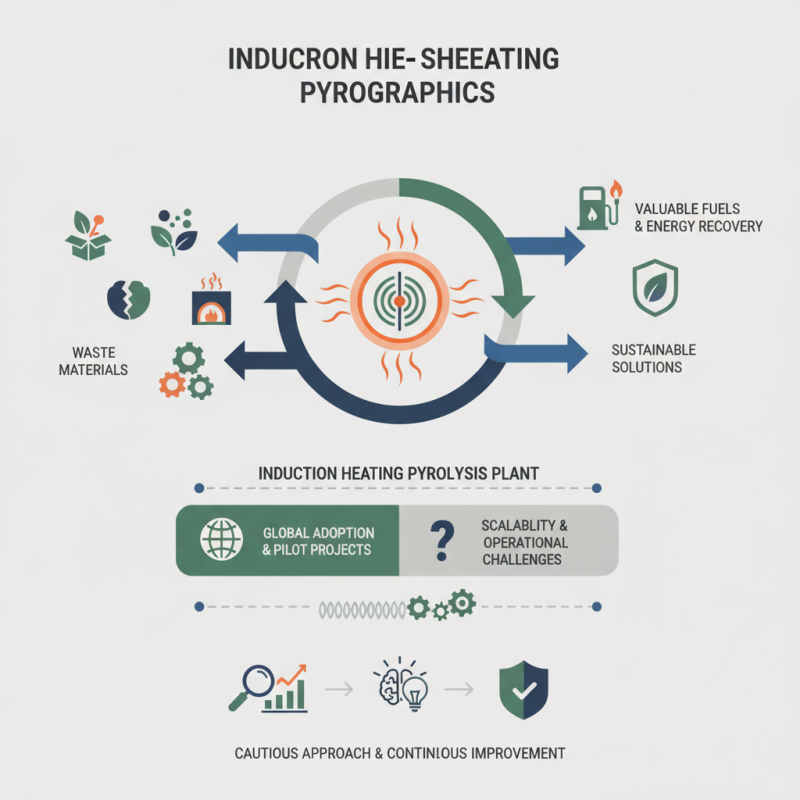
Induction heating pyrolysis technology is gaining traction in China. This method efficiently converts waste into energy. The process uses electromagnetic induction to heat materials rapidly. It transforms organic materials, like plastics and biomass, into valuable fuels. This technology minimizes environmental impact and maximizes resource recovery.
In China, companies are exploring this innovative approach. They focus on refining the efficiency of pyrolysis systems. However, challenges remain. The initial setup cost can be high, and technical expertise is vital. Some operators lack proper training, leading to operational issues. Continuous education and improvement are crucial for the industry’s growth.
The potential of induction heating pyrolysis is significant. It offers a cleaner alternative to traditional waste disposal methods. As global pressure to reduce waste increases, China’s technology could play a key role. Nonetheless, ongoing research and development are essential. This ensures safety and sustainability practices are followed. The journey toward optimization in this field is still unfolding.
| Feature | Specification | Benefits |
|---|---|---|
| Heating Method | Induction Heating | Efficient and uniform heating |
| Temperature Range | 300°C to 900°C | Versatile processing of various materials |
| Capacity | 500 kg to 2000 kg per batch | Scalable for different production needs |
| Power Supply | 380V/50Hz or Customized | Flexible power options for different markets |
| Control System | Automatic PLC Control | Enhanced operational efficiency and precision |
| Emission Standards | Meets International Standards | Environmentally friendly processing |
When considering the best induction heating pyrolysis plants from China, several key features stand out. These plants are designed for efficient waste conversion, utilizing advanced induction heating technology. This method enhances heat transfer, ensuring that materials reach their pyrolysis temperature more effectively. The result is a faster and more energy-efficient process.
Moreover, safety is a significant aspect of these plants. They come equipped with multiple safety features to protect operators and the environment. For instance, closed-loop systems are often implemented to minimize emissions and control byproducts.
However, it’s important to note that while the technology is innovative, proper training for operators is essential. A lack of experience can lead to operational challenges, despite the advanced design.
User feedback often highlights the need for ongoing technical support. Many buyers express the wish for a more comprehensive after-sales service. While the technology has proven reliable, adjustments and optimizations may be necessary over time. Thus, potential buyers should weigh the importance of continuous support against the initial efficiency benefits. These considerations can greatly influence the overall experience of operating an induction heating pyrolysis plant.
Induction heating is revolutionizing pyrolysis processes globally. This technology utilizes electromagnetic energy to generate heat directly within the materials. It creates an efficient and rapid heating mechanism, making it suitable for various pyrolysis applications.
One key advantage is its precision. Induction heating allows for accurate temperature control during pyrolysis. This feature is crucial for ensuring the best conversion rates of feedstock. Operators can adjust settings to tailor the process, which can enhance product quality. However, achieving this level of control requires proper training and experience.
Moreover, induction heating improves energy efficiency. It minimizes heat loss, which can be a significant concern in traditional heating methods. As a result, facilities can reduce operational costs. Yet, implementing this system can be complex and requires reliable equipment. Investing in training and technology is essential to maximize the benefits. These factors highlight the need for ongoing assessment and adaptation in pyrolysis operations.
The market for induction heating pyrolysis plants is rapidly evolving. These plants offer innovative waste management solutions. Industries are seeking sustainable methods to process waste efficiently. The increasing awareness of environmental issues drives this demand.
Many global buyers recognize the advantages of induction heating technology. It provides energy-efficient waste conversion with lower emissions. However, not every technology available is reliable. Buyers must carefully evaluate the credibility of suppliers. The presence of outdated systems can lead to operational issues. Consequently, trust and experience are paramount in the selection process.
Countries with strict environmental regulations are particularly interested in these solutions. They need technologies that align with their sustainability goals. The export potential for reliable induction heating pyrolysis plants is significant in these regions. Yet, some markets may still be skeptical about the initial investment. The return on investment can take time, leading to hesitation among potential buyers. Addressing these concerns will be vital for tapping into this growing market.
This chart illustrates the estimated market demand for induction heating pyrolysis plants across different global regions. The data indicates the highest demand in the Asia-Pacific region, followed by Europe and North America, revealing insights into export opportunities for manufacturers.
Choosing the right induction heating pyrolysis plant is crucial for global buyers. These plants convert waste materials into valuable resources. When selecting a plant, consider its efficiency and technology used. Efficient plants have higher yield rates. Always check the specifications and user reviews for insights.
Another vital aspect is the support from manufacturers. A reputable company offers guidance during installation and operations. Buyers should also assess the training provided for staff. This often reflects a company's commitment to customer satisfaction. After-sales service is equally important; it can save time and money.
Lastly, consider the environmental compliance of the plant. Regulations vary worldwide, impacting operational sustainability. Buyers must ensure that the technology used meets local standards. Researching potential vendors can reveal strengths and weaknesses. Understanding these aspects helps buyers make informed decisions.
: They use advanced induction heating technology for efficient waste conversion.
It enhances heat transfer, allowing materials to reach pyrolysis temperature more effectively.
It allows accurate temperature control, improving feedstock conversion rates.
Yes, they include multiple safety features to protect both operators and the environment.
Improper operation can lead to challenges, despite the technology's advanced design.
Many buyers express a desire for more comprehensive after-sales service and technical support.
Yes, its energy efficiency minimizes heat loss, lowering overall costs.
Yes, it can be complex and requires reliable equipment and training.
Adjusting settings during the process allows for tailored operations, enhancing product quality.
The need for continuous assessment and adaptation can be demanding for operators.
The article "China Best Induction Heating Pyrolysis Plant for Global Buyers?" provides a comprehensive overview of the innovative induction heating pyrolysis technology emerging from China. It highlights the key features of the best induction heating pyrolysis plants, such as energy efficiency, precise temperature control, and reduced emissions, which make them increasingly attractive for various recycling and waste management applications.
Furthermore, the article discusses the advantages of using induction heating in pyrolysis processes, including faster processing times and higher throughput. It also explores the growing market demand and export potential for these plants, emphasizing their significance in promoting sustainable practices globally. For international buyers, selecting the right induction heating pyrolysis plant is crucial, and this article serves as a valuable guide in making informed choices that align with their operational needs.

Huayuan