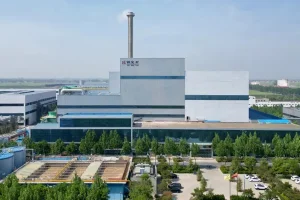
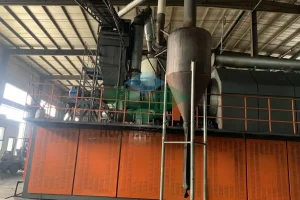
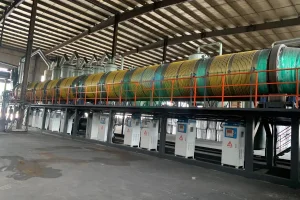
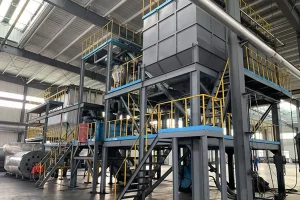
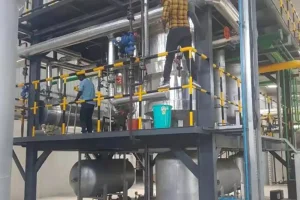
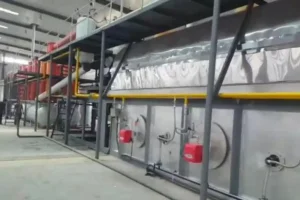
In the modern era of industrial evolution, a Waste Gas to Energy Plant Factory is no longer just a utility provider—it is the cornerstone of the circular economy. Globally, the industrial sector is responsible for nearly 30% of greenhouse gas emissions. However, what was once considered "waste gas"—flared natural gas, volatile organic compounds (VOCs), and high-temperature flue gases—is now recognized as a potent fuel source.
From the massive refineries in the Middle East to the intensive manufacturing hubs in Southeast Asia, the demand for integrated waste-to-energy solutions is skyrocketing. Companies are shifting from traditional "disposal" mindsets to "resource recovery" strategies, driven by stringent carbon taxes and the global push toward Net-Zero emissions.
Modern plants are integrating Artificial Intelligence to monitor gas composition in real-time, optimizing combustion and heat exchange efficiency automatically to maximize ROI.
The next generation of waste gas plants doesn't just produce energy; they incorporate CCUS (Carbon Capture, Utilization, and Storage) to ensure zero atmospheric impact.
Instead of massive centralized facilities, the trend is moving toward modular, skid-mounted factories that can be deployed directly at the source of waste gas production.
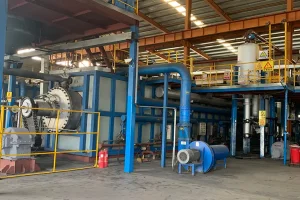
As a leading Waste Gas to Energy Plant Factory, we have observed a significant transition in global procurement needs. Stakeholders are no longer just looking for hardware; they require Thermal Equipment System Integration. This means providing a full-stack solution that includes gas purification, thermal conversion via waste heat boilers, and subsequent electricity generation or steam supply. The integration of Internet of Things (IoT) sensors allows our clients to manage their energy output from any corner of the world, ensuring that every BTU of waste heat is accounted for and utilized.
International buyers, particularly from Europe and North America, prioritize ASME-certified pressure vessels and A-class boiler manufacturing standards. Reliability is the primary concern because any downtime in a waste-to-energy plant can cause a bottleneck in the primary manufacturing process.
For a Waste Gas to Energy Plant to be successful locally, it must adapt to the specific gas caloric value and impurity levels of the region. Our engineering team specializes in customizing the heat exchange surfaces of our waste heat boilers to prevent corrosion and scaling, ensuring a service life that often exceeds 20 years in harsh industrial environments.
Choosing a Waste Gas to Energy Plant Factory from China, specifically one with the heritage of Huayuan Tech (founded in 1968), offers a unique blend of massive manufacturing scale and sophisticated technical expertise. Our facility covers over 200,000 square meters, allowing us to handle multiple large-scale global projects simultaneously without compromising on lead times.
Our advantage lies in our Vertical Integration. From initial design and D1/D2 pressure vessel design certification to A-class boiler manufacturing and onsite installation, we control the entire value chain. This results in significant cost savings—often 30-50% compared to Western counterparts—while maintaining equivalent or superior quality standards. We leverage a workforce where 34% are dedicated engineering personnel, ensuring that we stay at the forefront of pyrolysis technology and thermal integration.
Furthermore, our "Contract Energy Management" (CEM) and investment/financing models allow global partners to upgrade their facilities with minimal upfront capital expenditure. We don't just sell equipment; we provide a financial and technical pathway to sustainability. Our compliance with ISO9001, ISO14001, and OHSAS18001 ensures that our manufacturing processes meet the highest global ESG (Environmental, Social, and Governance) standards required by modern corporations.
Focus on waste to energy and waste tire pyrolysis technology, Huayuan Tech was founded in 1968. Our company covers a vast area of 209,335 square meters, with a dedicated plant area of 98,680 square meters. We are proud to employ more than 500 professionals, with engineering and technical personnel accounting for 34% of our total workforce.
We possess a complete suite of A-class boilers and pressure vessels manufacturing and testing equipment. Our credentials include:
With continuous development, we have evolved into a comprehensive firm engaged in the development, manufacturing, sales, and consulting of waste tire and plastic scrap pyrolysis machines, thermal equipment system integration, and energy efficient professional services.
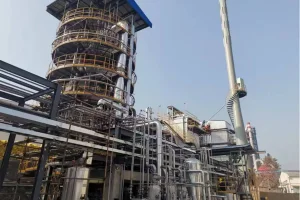
When searching for a Waste Gas to Energy Plant Factory, technical depth is the most critical factor for long-term success. At Huayuan Tech, our expertise spans across several complex thermal processes. The conversion of waste gas into energy involves sophisticated thermodynamics where gas streams—often containing corrosive elements like sulfur or chlorine—must be cooled and processed to generate steam or electricity.
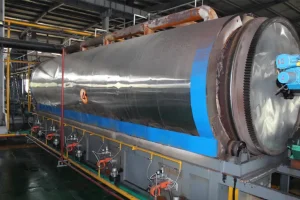
In our waste tire pyrolysis plants, the non-condensable gas produced during the heating process is a high-value fuel. Our factories design integrated systems that recycle this gas back into the heating system, making the plant nearly self-sufficient. This "Closed-Loop" engineering is what sets a premium factory apart from a standard equipment provider.
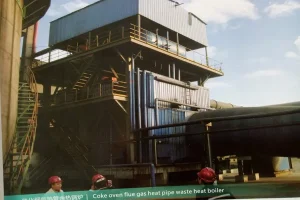
As a holder of a national A-class boiler manufacturing license, our waste heat boilers are engineered for maximum thermal absorption. We utilize advanced finned-tube technology and specialized heat transfer surfaces that prevent ash accumulation and maintain high efficiency even with "dirty" industrial waste gases. This reduces the need for frequent cleaning and maintenance, which is a major pain point for industrial operators globally.
The transition to a greener industrial future depends on the technology produced within a Waste Gas to Energy Plant Factory. By choosing a partner with over half a century of experience, certified manufacturing standards (ASME, ISO), and a massive R&D focus, companies can ensure their transition to energy efficiency is both profitable and sustainable. Whether you are managing industrial solid waste or looking to recover heat from chemical processes, our integrated solutions provide the reliability and performance required in the 21st-century industrial landscape.
 Huayuan