Choosing the best Tire Pyrolysis Machine requires more than comparing reactor prices. It demands evidence, process knowledge, and practical judgment.
The World Business Council for Sustainable Development reported that roughly one billion tires reach end-of-life globally each year. The European Tyre and Rubber Manufacturers’ Association also identifies millions of tonnes of end-of-life tires annually across Europe. These figures show the resource potential. They also expose the risks of choosing unreliable equipment.
A suitable machine should match your tire feedstock, required capacity, energy plan, and product-quality targets. Ask how efficiently it removes steel and fiber. Examine reactor temperature control, condenser performance, gas recycling, and char handling. Small details matter. A blocked pipe can stop production.
Dr. Costas A. Velis, a recognized waste-management researcher, has warned, “There is no silver bullet for waste management.” That principle applies here. Pyrolysis cannot compensate for weak maintenance, poor safety systems, or unclear environmental controls.
Technical brochures are not enough. Request independent test results, operating references, material specifications, and after-sales records. Check whether the supplier explains emissions monitoring and local permitting requirements clearly. Responsible projects follow applicable environmental, workplace, and fire-safety rules.
The best machine is not always the largest one. It is the system that operates consistently, produces testable outputs, and remains supportable after installation. Some purchasing decisions still overlook this point. A lower quotation may hide higher downtime, uneven oil quality, or expensive replacement parts.
This guide examines the practical criteria behind a dependable Tire Pyrolysis Machine choice, including design, performance, safety, documentation, and long-term operating experience.
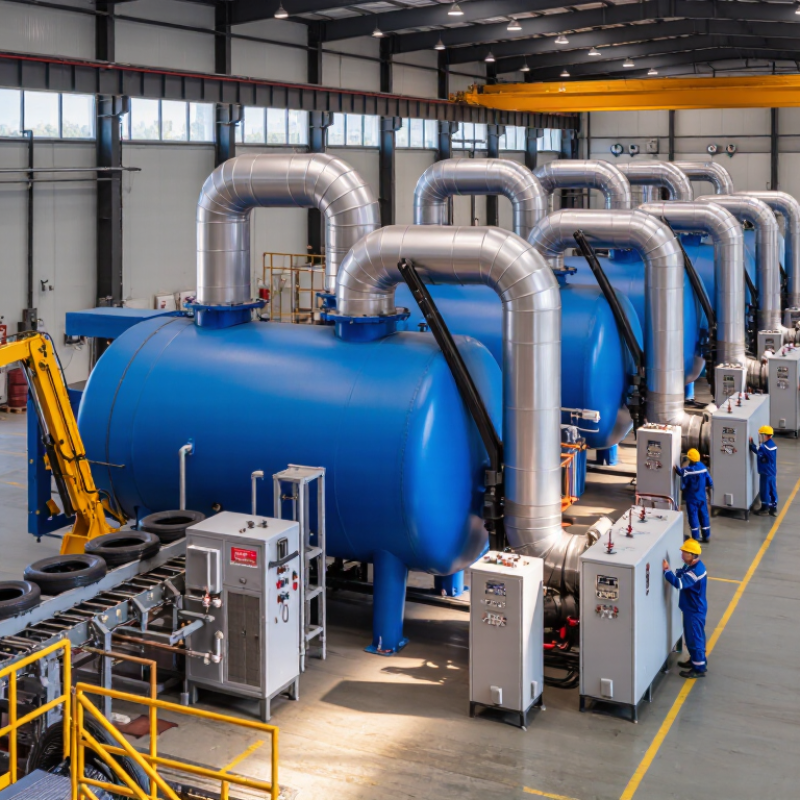
A tire pyrolysis machine converts waste tires into useful fractions through thermal decomposition in a low-oxygen chamber. It does not burn rubber in open air. Instead, prepared tires enter a sealed reactor, where controlled heat breaks long polymer chains into smaller compounds. Operating temperatures commonly range from about 350°C to 550°C, depending on the design. Temperature control matters. Too little heat leaves unprocessed rubber, while excessive heat can reduce oil quality and increase gas production. As the rubber decomposes, steel wire separates from the solid material. Vapors travel through condensers, where part becomes pyrolysis oil. The remaining non-condensable gas may return to the heating system. Recovered carbon-rich solid is collected separately and often needs further processing before industrial use.
Real operation is less tidy than a diagram. Tires vary in size, moisture, tread composition, and contamination, so output is never perfectly uniform. I would examine feed preparation, reactor sealing, temperature measurement, pressure protection, and emission-control equipment before comparing capacity claims. A reliable system should explain vapor cooling, gas management, dust removal, and acidic compound treatment. Ask for laboratory test data, energy consumption figures, maintenance records, and independent safety documentation. Small details matter. Poor condensation can waste oil, while uneven feeding can create hot spots. Automation helps, but it cannot replace trained operators and routine inspections. The overlooked weakness may be cleaning access. A difficult machine can lose more value than its brochure suggests.
Tire pyrolysis thermally decomposes rubber in an oxygen-limited reactor, producing oil, recovered carbon black-rich char, non-condensable gas, and recoverable steel. The representative mass distribution below is based on commonly reported ranges for whole end-of-life tires; actual yields vary with tire composition, reactor temperature, residence time, and feed preparation. When comparing machines, review their guaranteed throughput, heating uniformity, condensation efficiency, gas-recycling system, emission controls, and steel discharge design.
How to Choose the Best Tire Pyrolysis Machine?
Machine type determines more than capacity. It changes labor, heating stability, discharge speed, and product consistency. The U.S. Environmental Protection Agency reported 256 million scrap tires generated in 2017, with about 71.6% entering recovery markets. This volume shows why equipment selection must match local supply, not brochure claims.
Batch machines suit smaller facilities and variable feedstock. Operators load tires, heat the sealed reactor, cool it, and remove the recovered carbon and steel. They usually require more manual handling. Semi-continuous systems reduce waiting time through staggered reactor operation. One chamber can heat while another discharges. Continuous machines feed shredded tires steadily and may deliver higher output. They also demand tighter control of particle size, temperature, and gas flow.
A practical inspection matters.
The Global Tyre Industry Project estimates that roughly one billion end-of-life tires arise globally each year. That figure supports long-term feedstock planning, but it does not guarantee local supply. Check actual tire size, moisture, steel content, and daily volume. The European Tyre and Rubber Manufacturers’ Association also emphasizes material recovery and circular use in its industry reports. Ask whether the system recycles non-condensable gas for heating. Review emission controls, pressure protection, emergency shutdowns, and laboratory test results. I would not choose the largest reactor automatically. A smaller, well-monitored unit may perform better when feedstock changes frequently. No machine is perfect. That is worth remembering.
| Machine Type | Typical Feed Capacity | Operating Mode | Main Operating Difference | Typical Process Time | Labor Requirement | Best Suited For | Key Limitations |
|---|---|---|---|---|---|---|---|
| Batch Pyrolysis Machine | Commonly about 5–20 tonnes per batch, depending on chamber size and feed preparation. | Load, heat, pyrolyze, cool, and discharge as separate steps. | The reactor must normally be stopped for loading and unloading. | Usually about 8–20 hours per cycle, including heating and cooling; actual time varies with feedstock and design. | Higher; operators are needed for feeding, cooling, discharge, and routine handling. | Small or medium-scale projects, variable feed supply, and businesses seeking lower initial equipment complexity. | Lower productivity, more downtime between cycles, and greater manual handling. |
| Semi-Continuous Pyrolysis Machine | Often designed for approximately 10–30 tonnes per day, depending on reactor configuration and operating schedule. | Some stages operate continuously while loading or discharge is performed intermittently. | Material flow is partially continuous, reducing idle time without requiring a fully automated line. | Typically a continuous daily operation with periodic discharge and maintenance intervals. | Moderate; mechanical feeding and discharge reduce, but do not eliminate, operator involvement. | Growing facilities that need higher utilization and flexible operation with a moderate investment level. | Production interruptions may still occur, and process coordination is more complex than with batch equipment. |
| Fully Continuous Pyrolysis Machine | Commonly around 20–50+ tonnes per day when supported by suitable feed preparation and downstream systems. | Feeding, pyrolysis, gas circulation, and residue discharge are designed for continuous operation. | Material moves through the system continuously, so the reactor does not normally need to cool down between batches. | Designed for long production runs; the residence time inside the reactor is generally measured in hours. | Lower per tonne after commissioning, although skilled technicians are required for control and maintenance. | Large-scale projects with stable feedstock supply, sufficient capital, and a need for high utilization. | Higher capital cost, more complex controls, and greater sensitivity to feed consistency and maintenance quality. |
| Rotary Kiln System | Capacity varies widely; commercial systems are often configured from several tonnes per day to more than 20 tonnes per day. | A slowly rotating cylindrical reactor moves and mixes the material while it is heated externally. | Rotation improves heat transfer and solids movement, which can support continuous or semi-continuous processing. | Usually several hours of material residence time, subject to rotation speed, temperature, and feed size. | Moderate to low in automated configurations. | Facilities processing mixed or irregular solid feedstocks that require mechanical movement inside the reactor. | The rotating assembly requires careful sealing, alignment, and maintenance; energy demand depends strongly on insulation and feed moisture. |
| Vertical Reactor System | Commonly configured for small to medium throughput, often about 5–20 tonnes per batch or operating cycle. | Feedstock is charged vertically and moves mainly by gravity, with limited mechanical agitation. | The vertical layout can reduce floor area, but heat distribution and residue movement must be carefully managed. | Generally operated in cycles, with total time depending on loading, heating, pyrolysis, cooling, and discharge. | Moderate to high, especially when charging and discharge are not fully mechanized. | Sites with limited floor space and a moderate processing requirement. | Potentially uneven heat exposure, difficult residue removal, and lower suitability for high-volume continuous production. |
| Skid-Mounted or Modular System | Often selected for small to medium capacity; actual throughput depends on the number and size of modules. | Preassembled modules combine the reactor, condenser, piping, and control components for simplified installation. | The system can be installed, expanded, or relocated more easily than a fully built-in plant. | Depends on whether the modules use batch, semi-continuous, or continuous reactor operation. | Moderate; standardized equipment can simplify operation, but feed preparation and product handling still require staff. | Projects requiring faster installation, phased capacity expansion, or flexible site deployment. | Module size can limit throughput, and connecting multiple modules may increase piping, control, and maintenance complexity. |
How to Choose the Best Tire Pyrolysis Machine?
Capacity should match your real feedstock, not a supplier’s maximum figure. The European Tyre and Rubber Manufacturers’ Association reports about 3.5 million tonnes of end-of-life tyres arise in Europe each year. That volume does not mean your plant needs a huge reactor. Measure daily tyre supply, operating hours, and planned maintenance. A machine rated at 10 tonnes per day may deliver less under mixed tyre sizes, moisture, or frequent loading delays. Ask for continuous-feed test records, actual throughput, and heat-up time.
Energy use deserves equal attention. A 2021 review in Renewable and Sustainable Energy Reviews found that tyre pyrolysis commonly produces about 35–45% oil, 30–40% char, and 10–20% gas, depending on temperature and reactor design. Some non-condensable gas can support process heating, but it is not automatically enough. Check measured energy consumption per tonne, fuel quality, and gas-cleaning requirements. Product output is more than yield. Test oil viscosity, sulphur content, char ash, and steel recovery through independent laboratories. Small differences can change selling value.
Tips: Request a mass-balance sheet from a witnessed trial. Compare feedstock, heating demand, oil yield, char quality, and downtime. Do not trust one attractive number. I would also inspect insulation, temperature sensors, condensers, and emission controls personally. A polished brochure cannot reveal unstable operation. Leave room for a 10–15% capacity buffer; real plants rarely perform perfectly during their first months.
Choosing a tire pyrolysis machine requires more than checking reactor capacity. Safety systems should include automatic temperature control, pressure relief, gas-leak detectors, emergency shutdowns, and fire-resistant electrical equipment. Hydrogen sulfide and carbon monoxide can accumulate around gas lines. They are invisible threats. A practical inspection should verify sensor calibration records, alarm tests, and maintenance access before purchase.
Emissions control deserves equal attention. The European Tyre and Rubber Manufacturers’ Association reported that Europe manages more than three million tonnes of end-of-life tires annually. This scale shows why uncontrolled smoke is unacceptable. A suitable system should use sealed condensers, dust filtration, gas scrubbing, and thermal oxidation for non-condensable gases. Monitoring should cover particulate matter, VOCs, carbon monoxide, nitrogen oxides, sulfur compounds, and PAHs. The U.S. Environmental Protection Agency identifies these pollutants as important indicators in combustion-related air permitting, although pyrolysis limits vary by location.
Regulatory approval must be confirmed before installation, not after delivery. Requirements may include air permits, waste-treatment authorization, fire protection plans, wastewater controls, worker exposure assessments, and product-quality testing. In Europe, operators may also face REACH and CLP obligations for recovered oils, carbon materials, and steel. The Basel Convention’s technical guidance stresses controlled handling of hazardous residues and emissions. Ask for independent performance tests, not only laboratory brochures. Some promised emission figures are incomplete. A machine may perform well during trials, yet fail under wet feedstock, unstable temperatures, or poor maintenance. That possibility needs honest review.
Choosing a tire pyrolysis machine requires more than comparing purchase prices. The World Business Council for Sustainable Development’s Tire Industry Project estimates that about 1.5 billion tires reach end of life globally each year. The U.S. Environmental Protection Agency has reported roughly 290 million scrap tires generated annually in the United States. These volumes make feedstock access important, but supply quality matters more. Ask suppliers for moisture limits, wire content, throughput tests, and real operating records.
Compare total cost of ownership over five years. Include the reactor, condensers, emissions controls, installation, labor, electricity, cooling water, maintenance, and residue handling. A low quotation may hide expensive seals, frequent shutdowns, or weak after-sales support. Request energy consumption per tonne, expected oil yield, carbon quality, and documented uptime from comparable sites. Independent test data is stronger than a sales brochure. Still, even published figures can vary.
A credible supplier should provide process drawings, safety procedures, spare-parts schedules, and clear warranty exclusions. Check whether local technicians can respond quickly. Ask to inspect a working installation, not only polished videos. The International Energy Agency emphasizes that energy efficiency depends on actual operating conditions, not equipment labels alone. That point is easy to miss. A realistic financial model should test lower feedstock supply, unstable electricity prices, and three unexpected shutdowns. My own assessment would not trust one impressive yield figure; long-term value is usually decided by boring details, including cleaning time, operator training, and documented maintenance history.
Measure your daily tire supply, operating hours, and planned maintenance. A machine rated for ten tonnes daily may produce less with mixed sizes or wet material. Leave a 10–15% capacity buffer. Measure it.
Ask for witnessed trial records showing feedstock weight, heating time, oil yield, char output, steel recovery, and downtime. Continuous-feed results are more useful than attractive maximum figures. One number is not enough.
Energy demand depends on reactor design, temperature, insulation, feedstock moisture, and fuel quality. Ask for measured energy consumption per tonne. Some process gas may support heating, but it may not cover all demand. Not always.
Test oil viscosity, sulfur content, and other relevant chemical properties. Check char ash content and steel recovery. Small quality differences can change selling value. Test the real output.
Look for automatic temperature control, pressure relief, gas-leak detectors, emergency shutdowns, and fire-resistant electrical equipment. Verify sensor calibration, alarm testing, and maintenance access. Invisible gases can accumulate near pipelines.
Suitable systems may include sealed condensers, dust filters, gas scrubbing, and thermal oxidation. Monitoring should cover particles, volatile compounds, carbon monoxide, nitrogen oxides, sulfur compounds, and PAHs. Poor maintenance can change results quickly.
Confirm air permits, waste-treatment authorization, fire protection plans, wastewater controls, and worker exposure assessments. Recovered oil and carbon materials may require product-quality reviews. Check local requirements before delivery, not afterward.
Compare five-year ownership costs, including installation, labor, electricity, cooling water, maintenance, and residue handling. Inspect a working installation and review maintenance records. Test financial models with lower supply, higher electricity prices, and three unexpected shutdowns. I may be too cautious, but brochures rarely show cleaning time.
Choosing the right Tire Pyrolysis Machine requires more than comparing purchase prices. The process uses controlled heating in a low-oxygen environment to convert end-of-life tires into useful outputs such as oil, recovered carbon material, and steel. Buyers should understand the differences between batch and continuous systems, including their loading methods, operating stability, labor needs, maintenance requirements, and production capacity. Evaluating energy consumption, heating efficiency, processing time, and product consistency is essential for determining whether a machine can meet a facility’s long-term goals.
Safety and environmental performance should also guide the decision. A suitable system should include reliable temperature controls, pressure protection, gas handling, emission treatment, and fire-prevention measures, while supporting compliance with local permits and environmental standards. When comparing suppliers, consider equipment quality, installation support, spare parts availability, training, warranty terms, and proven operating data. The best choice is not always the machine with the lowest initial cost, but the one that offers dependable performance, manageable operating expenses, consistent output, and strong long-term value.

Huayuan