How to Choose the Best Tyre Pyrolysis Plant?

Time:2026-10-01 Author:Aria
0%

Choosing the best Tyre Pyrolysis Plant requires more than comparing prices and advertised capacity. The right decision begins with your actual tyre supply, site conditions, energy costs, and product goals. A plant processing 10 tons daily may need different equipment from one handling 30 tons. Feedstock quality matters too. Wet, mixed, or heavily contaminated tyres can reduce efficiency and increase maintenance.

Look closely at reactor design, heating control, sealing systems, and cooling equipment. Ask for verified production data, not attractive estimates. Inspect oil quality, carbon black recovery, steel separation, and gas recycling performance. Emission control equipment must be clearly documented and suitable for local environmental requirements. Reliable suppliers should provide technical drawings, operating records, safety procedures, and accessible after-sales support. Their engineers should explain cleaning intervals, spare parts, emergency shutdowns, and operator training in practical terms.

Details matter.

A factory visit can reveal more than a brochure. Watch the material feeding process, inspect welds, and ask how often key components are replaced. Confirm that the proposed installation follows applicable permits, workplace rules, and environmental standards. A low purchase price can become expensive through downtime, weak warranties, or difficult maintenance. Still, no checklist is perfect. Production results depend on tyre composition, operator skill, weather, and routine servicing. Leave room for uncertainty, and request independent testing when possible. With careful evidence, professional guidance, and realistic expectations, buyers can choose a Tyre Pyrolysis Plant that supports safe, compliant, and sustainable long-term operation.
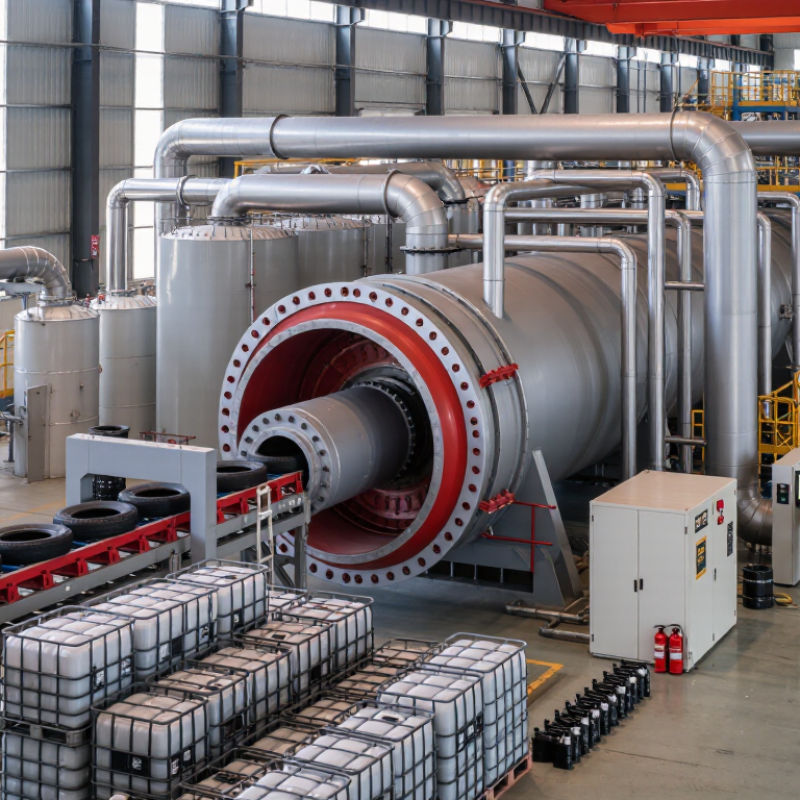
How to Choose the Best Tyre Pyrolysis Plant?

Understanding Tyre Pyrolysis Plant Types and Processing Methods

How to Choose the Best Tyre Pyrolysis Plant?

Understanding tyre pyrolysis plant types starts with feedstock and operating scale. The WBCSD Tire Industry Project estimates that about 1.5 billion waste tyres arise globally each year. A small batch plant suits irregular supplies and easier maintenance. However, it requires more labour and produces uneven daily output. Semi-continuous systems improve feeding and discharge, while continuous rotary-kiln plants support steadier production. The choice is not always obvious.

Processing method matters as much as plant capacity. Most systems shred tyres, remove oversized steel, and heat rubber between 400°C and 550°C without oxygen. Rotary kilns tolerate mixed tyre sizes and dirty feedstock. Fluidized-bed designs can transfer heat efficiently, but they demand tighter particle control. Vacuum pyrolysis may improve vapour handling, yet it adds equipment and operating complexity. Real projects are messier.

ETRMA’s 2023 end-of-life tyre report recorded nearly 3.9 million tonnes of waste tyres in Europe. Published engineering studies commonly report yields near 35–45% pyrolysis oil, 30–35% recovered carbon material, 10–15% steel, and 10–15% process gas. These figures vary with tyre composition, heating rate, and condensation design. Operators should verify oil properties using recognised methods, including ASTM distillation and viscosity testing. A plant may look efficient on paper, but unstable feed preparation can reduce actual performance. That weakness deserves serious attention.

Assessing Feedstock Capacity and Production Requirements

Choosing a tyre pyrolysis plant starts with feedstock, not equipment nameplate capacity. The U.S. Environmental Protection Agency’s Scrap Tires: Handbook on Recycling Applications and Management estimates about 290 million scrap tyres were generated annually in the United States during its assessment period. The global supply is larger, but collection is uneven. Regional availability matters more than impressive brochures.

Measure actual deliveries for several months. Record tyre type, moisture, steel content, textile content, and particle size. A plant rated at 10 tonnes daily may process less after maintenance and sorting losses. At 80% operating availability, that rating equals roughly 2,920 tonnes yearly. Do not guess. Seasonal shortages can expose an oversized design.

Production requirements must match the buyer and the energy balance. Technical studies commonly report pyrolysis oil yields near 40–45% by mass, but results vary with reactor temperature and feedstock composition. The World Business Council for Sustainable Development’s Tire Industry Project highlights the importance of consistent end-of-life tyre management and material quality.

ASTM-related testing practices also show why oil properties need regular analysis, especially viscosity, sulphur, water, and flash point.

A 10-tonne daily input could theoretically produce about 1,170–1,315 tonnes of oil annually at 80% availability, before process losses. The remaining char, steel, and non-condensable gas need defined outlets. A spreadsheet can look convincing and still fail.

I would leave capacity headroom, perhaps 10–15%, rather than design around perfect deliveries. That choice feels conservative, but unreliable feedstock is often the real bottleneck.

Comparing Technology, Product Quality, and Energy Efficiency

Choosing the best tyre pyrolysis plant requires more than comparing purchase prices. ETRMA’s 2023 End-of-Life Tyres Management report estimates that Europe handles about 3.9 million tonnes of waste tyres annually. This scale makes stable operation essential. Continuous systems can reduce cooling losses and labour needs, while batch systems may offer simpler maintenance and lower initial costs. The practical choice depends on feedstock, capacity, and local energy prices.

Technology affects product quality directly. A well-designed reactor should control heating evenly, prevent oxygen entry, and condense oil in separated fractions. Test the oil using ASTM D86 for distillation range and ASTM D4294 for sulphur content. Carbon black also needs ash, moisture, and surface-area testing. ASTM D482 and ISO 11269 methods can support comparison. A darker product is not automatically a better product. It may contain excessive ash or unstable compounds.

Energy efficiency deserves measured evidence. Independent reviews in Journal of Environmental Management report pyrolysis energy demand commonly varying by feedstock and system design, often around 4–8 MJ per kilogram. Ask for audited figures, not optimistic brochures. Gas recycling can reduce external fuel consumption, but poor insulation quietly wastes heat. I would also inspect start-up fuel use, downtime, and condensate losses. A plant may look efficient during a short trial. Long-term data can tell a less attractive story.

Checking Safety Systems, Environmental Compliance, and Certifications

Choosing the best tyre pyrolysis plant requires more than comparing processing capacity or equipment prices. Safety systems should be inspected in practical detail. Look for gas detectors near storage and reactor areas, automatic temperature controls, pressure relief devices, fire suppression equipment, and emergency shutdown buttons. The control system should move to a safe condition during power loss. Test records matter.

Environmental compliance needs equal attention. Ask how the plant controls process gas, dust, wastewater, and odour. A closed-loop cooling system can reduce water discharge. Proper condensers and filtration units should be sized for actual operating conditions, not only brochure figures. Request recent emissions data, maintenance logs, and waste-handling procedures. Small gaps can become expensive problems.

Certifications should be verified independently. Check the issuing body, certificate scope, expiry date, and covered equipment. Quality and environmental management certifications may support supplier reliability, but they do not replace local permits or site approvals. A factory acceptance test and an on-site performance test provide stronger evidence. During a visit, inspect cable protection, valve labels, access routes, and operator training records. A clean control room is encouraging, but it proves little by itself. I would also question unclear documents, because honest suppliers sometimes have incomplete paperwork. That weakness should be corrected before installation, not after an incident.

How to Choose the Best Tyre Pyrolysis Plant? - Checking Safety Systems, Environmental Compliance, and Certifications
Evaluation Category Key Dimension What to Check Recommended Evidence or Acceptance Benchmark Priority
Safety Systems Risk assessment and machine design Confirm that the plant has documented hazard identification covering high temperature, flammable gas, pressure, rotating equipment, tyre-wire handling, and maintenance activities. Request a documented risk assessment based on recognized machinery-safety principles, including identified hazards, risk reduction measures, and residual-risk instructions. Critical
Safety Systems Emergency shutdown system Check for clearly accessible emergency-stop devices, automatic shutdown logic, safe isolation of heaters and feed systems, and manual reset after a trip. Emergency stops should be tested during factory acceptance testing and site commissioning. Shutdown functions should be documented in control-system drawings and operating procedures. Critical
Safety Systems Pressure protection Verify pressure monitoring, high-pressure alarms, vacuum protection where applicable, pressure-relief devices, vent routing, and safe discharge locations. Relief devices should be correctly sized, accessible for inspection, protected from blockage, and supported by calculations or engineering documentation. Pressure vessels should meet the applicable local legal requirements. Critical
Safety Systems Flammable gas and leak detection Check whether combustible-gas detectors are installed in areas where pyrolysis gas may accumulate, with audible and visual alarms and automatic isolation where required. Detection points should reflect the density and movement of the gases involved. Alarm set points, calibration intervals, detector locations, and response actions should be documented. Critical
Safety Systems Inerting and oxygen control Evaluate oxygen monitoring, nitrogen or other inert-gas supply, purge sequences, non-return protection, and interlocks that prevent unsafe startup. Startup, shutdown, and emergency-purge sequences should be written and tested. The design should prevent air ingress and ignition during normal operation and foreseeable upsets. Critical
Safety Systems Fire and explosion protection Review fire detection, suitable extinguishing systems, hot-surface protection, explosion-risk assessment, separation distances, and access for emergency services. Protection measures should be selected from a site-specific fire and explosion assessment. Water, foam, dry powder, or other systems must be compatible with the identified hazards and local fire regulations. Critical
Electrical and Controls Electrical safety and control panels Check grounding, bonding, short-circuit protection, enclosure ratings, cable selection, control-panel labeling, and safe isolation procedures. Electrical design should be reviewed against applicable national requirements and recognized standards such as IEC 60204-1. Hazardous-area equipment must be suitable for the classified zone. High
Environmental Compliance Process-gas treatment Determine how non-condensable gas, volatile organic compounds, odours, acid gases, and particulate matter are controlled before release or reuse. Look for a defined gas-cleaning and combustion arrangement, operating limits, maintenance procedures, and emission measurements required by the local environmental permit. Critical
Environmental Compliance Emission monitoring and reporting Check whether the design allows representative sampling of stack emissions and records operating parameters such as temperature, pressure, flow, and combustion conditions. Emission limits and monitoring frequency must be taken from the installation’s jurisdiction-specific permit. Supplier guarantees should identify test methods, operating conditions, and measurement uncertainty. High
Environmental Compliance Water, wastewater, and stormwater controls Assess whether the process requires water, how contaminated water is handled, and whether oil, chemicals, and tyre residues can enter drains or soil. The plant should include spill containment, sealed storage areas, drainage segregation, and a documented wastewater-disposal route. Discharge must comply with local regulations. High
Environmental Compliance Product and residue management Review the handling and storage of recovered oil, recovered carbonaceous solid, steel, char, filters, spent catalysts, and other residues. Each output should have a defined specification, storage method, sampling plan, transport classification where applicable, and legally compliant end-use or disposal route. High
Environmental Compliance Energy efficiency and heat recovery Compare insulation quality, heat recovery from process gas or exhaust, burner efficiency, standby consumption, and the percentage of process gas reused. Ask for a mass-and-energy balance based on a stated tyre feed composition, moisture level, operating temperature, throughput, and product assumptions. Important
Technical Performance Feedstock preparation and contamination tolerance Check accepted tyre sizes, maximum moisture, steel and fibre content, oversized pieces, feeding limitations, and the need for shredding or pre-treatment. The supplier should provide written feed specifications and explain how deviations affect throughput, safety, emissions, product quality, and maintenance requirements. High
Technical Performance Temperature, residence time, and process control Review temperature measurement points, independent high-temperature protection, residence-time control, heating-zone adjustment, and alarm history. Operating ranges should be supported by process data from comparable feedstock. Critical temperature instruments should be calibrated and protected against single-point failure. High
Certifications and Standards Machinery risk and safety-control documentation Check whether the safety-related control system has been designed and validated using a recognized functional-safety approach. Request design and validation records referring, where applicable, to ISO 12100 for machinery risk assessment and ISO 13849-1 for safety-related control systems. High
Certifications and Standards Hazardous-area compliance Determine whether flammable gas or vapour can create classified hazardous areas around reactors, condensers, gas storage, burners, vents, or pumps. Where applicable, equipment should be selected and documented under the relevant hazardous-area rules, such as ATEX 2014/34/EU in applicable European markets or the local equivalent. Conditional
Certifications and Standards Electrical and control-system conformity Verify conformity documentation for electrical assemblies, wiring, protective devices, control cabinets, and emergency-control circuits. Applicable standards may include IEC 60204-1 and relevant national electrical codes. Certification must match the installation location and voltage system. High
Certifications and Standards Environmental management certification Check whether the supplier has a structured environmental-management system covering legal registers, objectives, waste, emissions, incidents, and continual improvement. ISO 14001 certification can support supplier evaluation, but it does not replace the plant’s local environmental permit or emission compliance obligations. Conditional
Verification and Contract Factory acceptance and performance testing Confirm that safety functions, throughput, energy use, product quality, emissions-related equipment, alarms, and interlocks will be tested before shipment and after installation. The contract should define test procedures, feedstock conditions, measurement methods, acceptance limits, retesting rights, training, spare parts, and remedies for failed performance guarantees. Critical
Verification and Contract Certification authenticity and scope Check the certificate number, issuing body, validity period, covered facility or product, applicable standard, and whether the document applies to the actual plant configuration. Certificates should be independently verifiable through the issuing body or accreditation database. A general company certificate should not be treated as certification of every machine or process. High
Operations and Maintenance Training, manuals, and lifecycle support Review operating manuals, lockout and isolation procedures, emergency response instructions, preventive-maintenance schedules, calibration requirements, and operator training. Documentation should be supplied in the operating site’s required language and include drawings, spare-parts lists, inspection intervals, troubleshooting procedures, and records for safety-critical components. High

Evaluating Costs, Suppliers, Installation, and Long-Term Support

Choosing a tyre pyrolysis plant starts with the feedstock, not the brochure. The WBCSD’s 2019 End-of-Life Tyres report estimates roughly 1.5 billion tyres reach end of life globally each year. That volume does not guarantee stable supply. Check local collection costs, tyre sizes, moisture, and contamination before approving capacity.

Request three-year operating costs, not only the equipment price. Include electricity, labour, catalysts, cooling water, maintenance, insurance, and residue handling. Peer-reviewed reviews in Renewable and Sustainable Energy Reviews commonly report oil yields around 35–45% by tyre weight. Actual results vary with feedstock and reactor design. Ask suppliers for independent test data from tyres like yours. A spreadsheet can still lie.

Installation quality affects long-term returns. Confirm civil-work drawings, fire protection, emissions controls, commissioning duties, and operator training in writing. The European Commission’s Best Available Techniques framework stresses monitored emissions and reliable process control for thermal treatment facilities. Supplier evaluation should include audited references, spare-parts availability, response times, and remote diagnostics. Insist on performance guarantees with measurable limits for output, uptime, energy use, and emissions. Visit an operating plant if possible. Photos are not evidence. A cheap plant may become an expensive construction project when local grid capacity, permits, or transport routes were overlooked. Allow a contingency budget; optimistic planning is a common weakness. Ask who remains responsible after the warranty expires.

How to Choose the Best Tyre Pyrolysis Plant

A practical evaluation should balance capital cost, installation requirements, environmental compliance, operating efficiency, and long-term technical support. The weighting below is a supplier-neutral decision framework for comparing tyre pyrolysis projects.

Cost should not be assessed separately from reliability and support. A lower purchase price may result in higher installation, maintenance, downtime, or compliance costs over the plant’s operating life.

FAQS

How much scrap tyre feedstock should I secure before selecting a plant?

Measure actual deliveries for several months. Record tyre type, moisture, steel, textiles, and particle size. Regional supply can change sharply. Do not trust estimates alone.

Does a plant rated for 10 tonnes daily produce 10 tonnes every day?

Not usually. At 80% availability, it processes about 2,920 tonnes yearly. Sorting, maintenance, and shortages reduce output. Real capacity is less glamorous.

How much pyrolysis oil might a 10-tonne daily system produce?

A 10-tonne daily input may produce roughly 1,170–1,315 tonnes yearly. This assumes 40–45% oil yield and 80% availability. Actual results vary.

What should happen to char, steel, and non-condensable gas?

Define reliable outlets before installation. Test char quality and steel cleanliness. Gas may support heating, but only with proper controls. Hope is not a plan.

Should I choose a batch or continuous system?

Continuous systems may reduce cooling losses and labour needs. Batch systems can offer simpler maintenance and lower initial costs. Feedstock, scale, and energy prices decide.

How can I compare oil and carbon product quality?

Test oil viscosity, sulphur, water, flash point, and distillation range. Test carbon material for ash, moisture, and surface area. Darker material is not automatically better.

How do I verify the plant’s energy efficiency?

Request audited energy figures, not attractive brochure claims. Check gas recycling, insulation, start-up fuel, downtime, and condensate losses. Short trials can mislead.

Which safety and environmental details deserve inspection?

Look for gas detectors, temperature controls, pressure relief, fire suppression, and emergency shutdowns. Ask about dust, odour, wastewater, and process gas. Test records matter.

Are certificates enough to prove a plant is suitable?

No. Verify the issuing body, scope, expiry date, and equipment covered. Local permits and site approvals remain necessary. On-site performance testing gives stronger evidence.

Conclusion

Choosing the best Tyre Pyrolysis Plant requires a clear understanding of your raw materials, production goals, and operating conditions. Begin by comparing different plant types and processing methods, including batch, semi-continuous, and continuous systems. Evaluate the expected tyre supply, daily processing capacity, product demand, and flexibility for future expansion. Technology should also be assessed through product quality, heating performance, fuel consumption, automation, and overall energy efficiency.

Safety and environmental responsibility are equally important. Confirm that the plant includes reliable temperature control, pressure monitoring, fire prevention, emission treatment, and emergency shutdown systems, while meeting applicable certifications and environmental requirements. Finally, review the complete investment cost, installation process, spare-parts availability, operator training, warranty terms, and long-term technical support. A careful comparison of these factors will help you select a dependable, efficient, and sustainable solution that matches your budget and business objectives.


Aria

Aria

Aria is a dedicated marketing professional with a deep passion for innovative strategies and a keen understanding of our company's product offerings. With a wealth of experience in the industry, Aria excels at crafting engaging content that highlights the unique features and benefits of our......