Choosing a Waste Tire Pyrolysis Plant in 2026 requires more than comparing prices or colorful product brochures. The right decision begins with your tire supply, production target, local environmental requirements, and available site utilities. A plant designed for 10 tons daily may perform poorly when forced beyond its rated capacity. That mistake can become expensive.
Look closely at the reactor design, heating method, feeding system, gas recycling, and cooling equipment. Ask how the supplier controls dust, odors, noise, and non-condensable gas emissions. Request operating records from comparable installations, not only laboratory figures. Visit a working facility if possible. Watch the material flow, inspect sealing points, and ask operators about maintenance during difficult production weeks. Small details matter.
The final products also deserve careful evaluation. Tire pyrolysis oil, recovered carbon material, and steel wire require consistent quality and realistic markets. Obtain independent testing reports for moisture, sulfur, ash, and calorific value. Confirm whether the equipment supports safe shutdowns, fire prevention, pressure monitoring, and trained operator procedures. A reliable manufacturer should provide manuals, commissioning support, spare parts, and responsive after-sales service.
No checklist is perfect. Real projects contain surprises. Feedstock quality changes, energy costs rise, and local approval processes may take longer than expected. Therefore, compare total ownership costs over several years, rather than focusing only on the purchase price. Choose evidence over promises, documented performance over attractive claims, and a supplier willing to discuss limitations openly. That approach creates a more defensible investment and a safer, more dependable operation.
What Is a Waste Tire Pyrolysis Plant?
What Is a Waste Tire Pyrolysis Plant?
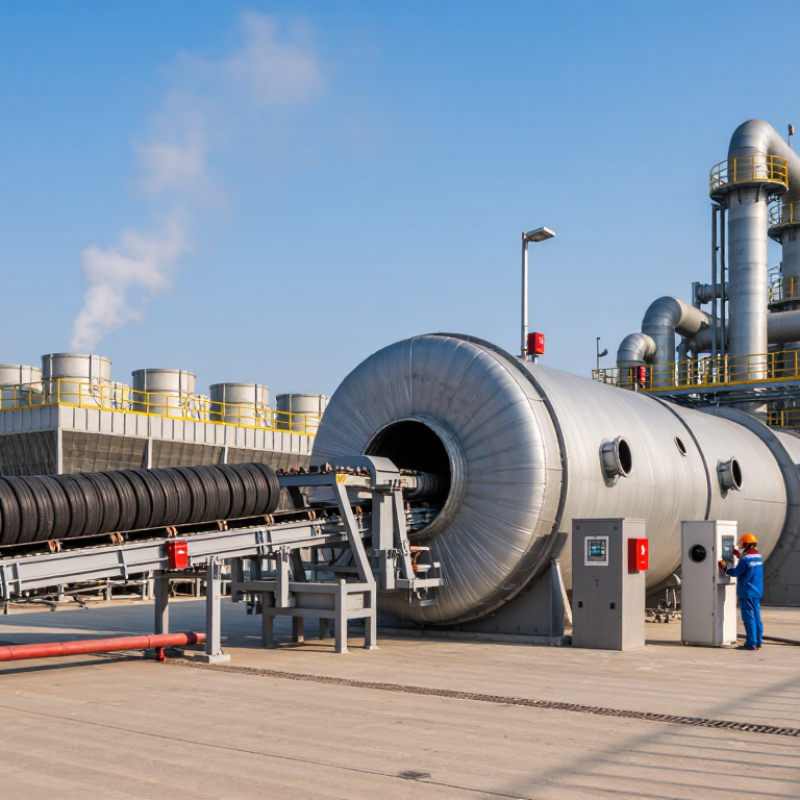
A waste tire pyrolysis plant is an industrial system that heats shredded tires in a low-oxygen reactor. It does not burn the rubber directly. Instead, controlled heat breaks tire polymers into several usable outputs. These commonly include pyrolysis oil, carbon-rich char, non-condensable gas, and recovered steel. The gas may support reactor heating, but this depends on its quality and energy balance.
The need is substantial. The U.S. Environmental Protection Agency reported about 274 million scrap tires generated in 2021. Its report also recorded a 71.4% beneficial-use rate for those tires. In Europe, ETRMA has reported roughly 3.5 million tonnes of end-of-life tires arising annually. These figures show the feedstock scale, but they do not prove that every plant is practical.
A reliable plant needs more than a large reactor.
Buyers should examine continuous feeding, temperature control, condenser design, gas cleaning, char handling, and steel separation. Emission monitoring matters too.
A plant may produce oil, yet still perform poorly if its oil contains unstable compounds or excessive impurities. I have seen specifications focus heavily on capacity. That can be misleading.
Actual output depends on tire composition, moisture, operating temperature, maintenance, and operator skill. EPA and ETRMA data are useful benchmarks, not guarantees for one facility.
Which Feedstock and Processing Capacity Should You Choose?
How to Choose a Waste Tire Pyrolysis Plant in 2026: Feedstock and Processing Capacity
Choosing a pyrolysis plant starts with feedstock, not the advertised reactor size. Waste tires vary in steel content, moisture, tread thickness, and contamination. Passenger tires usually process differently from truck tires. Agricultural tires may require stronger cutting and conveying equipment. A practical audit should record daily supply, seasonal changes, storage space, and transport distance. Inspect several loads, not one clean sample. That sample can mislead. Confirm whether the plant accepts whole tires, pre-cut pieces, or shredded feedstock. Ask for test results using material similar to yours. Reliable decisions require measured data, operating records, and clear maintenance procedures.
Tips: Weigh incoming tires for at least four weeks. Separate passenger, truck, and off-road tires. Measure moisture and foreign materials. Keep a reserve of feedstock. A full yard is not proof of stable supply. It may hide costly sorting work.
Capacity should match dependable supply, not ambitious forecasts. If a site receives 20 tonnes daily, a 10-tonne-per-day line may provide useful flexibility. A larger unit could sit idle, increasing labor and maintenance costs. However, limited capacity can create storage pressure and delayed deliveries. Compare hourly throughput, heating time, cooling time, and planned downtime. Ask how output changes with wet or heavily reinforced tires. Review expected oil, recovered carbon material, steel, and gas yields under realistic conditions. Verify emissions controls, fire protection, worker training, and local permits with qualified professionals. Do not rely on sales estimates alone. Operational experience suggests a modest buffer is sensible, but the right buffer depends on contracts and weather. Recheck the calculation after three months of operation.
How to Choose a Waste Tire Pyrolysis Plant in 2026? - Which Feedstock and Processing Capacity Should You Choose?
Use the following comparison as a preliminary planning guide. Product yields and recommended capacities are typical industry ranges for end-of-life tire pyrolysis and should be confirmed through feedstock testing, local regulations, equipment trials, and a detailed mass-and-energy balance.
Feedstock Selection and Processing Capacity Reference
| Feedstock Type |
Typical Composition or Condition |
Expected Pyrolysis Oil Yield |
Expected Carbon Black-Rich Char Yield |
Expected Steel Recovery |
Pre-Treatment Requirements |
Recommended Initial Capacity |
Key Selection Considerations |
| Whole Passenger-Car Tires |
Mixed rubber, steel wire, textile, carbon black, and additives; generally contains about 10% to 15% steel and 5% to 10% textile by mass. |
Approximately 35%–45% |
Approximately 30%–40% |
Approximately 10%–15% |
Removal of loose debris; cutting or shredding may be required depending on reactor design. Whole-tire feeding requires larger loading equipment. |
10–30 metric tonnes/day for a first project with a stable local supply. |
Suitable where whole tires are readily available and labor or equipment for tire handling is accessible. The feed system must tolerate variations in tire size and steel content. |
| Truck and Bus Tires |
Heavier tires with thicker rubber sections and a higher steel content than most passenger-car tires. |
Approximately 35%–45% |
Approximately 30%–40% |
Approximately 15%–25% |
Pre-cutting, bead-wire management, and stronger conveying or feeding equipment are commonly required. |
20–50 metric tonnes/day when a commercial fleet or municipal supply contract is available. |
Can provide a strong steel-recovery stream, but handling costs, cutting power, and wear on equipment are usually higher than for passenger tires. |
| Mixed End-of-Life Tires |
Combination of passenger, truck, bus, agricultural, and specialty tires with variable rubber, textile, and steel proportions. |
Approximately 35%–50% |
Approximately 30%–40% |
Approximately 10%–20% |
Sorting, removal of oversized items, and regular adjustment of feeding and operating conditions are recommended. |
10–30 metric tonnes/day until feedstock variability is well understood. |
Usually the easiest feedstock to source, but yield consistency is lower. A flexible plant design and representative sampling program are important. |
| Pre-Shredded Tire Chips |
Typically produced as pieces of about 25–100 mm; steel and textile content depends on the shredding process. |
Approximately 38%–48% |
Approximately 30%–40% |
Approximately 10%–18% |
Screening for oversized pieces, moisture control, and removal of fines or foreign materials may be needed. |
20–60 metric tonnes/day where a reliable tire-shredding supplier is nearby. |
Offers more uniform feeding and higher automation potential. The purchase price must include shredding, transport, storage, and possible moisture-control costs. |
| Steel-Removed Tire Rubber |
Rubber-rich tire material with most bead and belt steel removed; may still contain textile fibers and residual metal. |
Approximately 40%–50% |
Approximately 30%–40% |
Usually less than 5% residual steel |
Magnetic separation, removal of remaining textile, particle-size control, and protection against excessive moisture. |
5–20 metric tonnes/day for a specialized rubber-processing operation. |
Reduces reactor wear and improves feeding uniformity, but the upstream separation cost and lower steel-recovery revenue must be included in the financial model. |
| Rubber Granules or Fine Crumb Rubber |
Processed rubber particles, often below 10 mm, with relatively uniform size and low visible steel content. |
Approximately 40%–50% |
Approximately 30%–40% |
Usually less than 3% residual steel |
Dust control, explosion-risk assessment, moisture control, and a suitable fine-material feeding system. |
5–15 metric tonnes/day unless the plant is specifically designed for continuous fine-particle feeding. |
Provides consistent heat transfer and feeding, but dust handling, fire prevention, storage, and feed-system design become more critical. |
Processing Capacity Selection Guide
| Nominal Capacity |
Typical Daily Feed Requirement |
Suitable Project Stage |
Indicative Feedstock Supply Requirement |
Typical Operational Profile |
Main Advantages |
Main Risks or Constraints |
| 5–10 metric tonnes/day |
About 1,500–3,000 metric tonnes/year at 300 operating days. |
Pilot, demonstration, or small local recycling project. |
Stable access to approximately 6–12 metric tonnes/day, allowing for seasonal and logistical variation. |
Often batch-oriented, with lower material-handling complexity. |
Lower initial feedstock commitment, easier operator training, and a practical scale for validating local product markets. |
Higher production cost per tonne and limited ability to absorb long plant stoppages. |
| 10–30 metric tonnes/day |
About 3,000–9,000 metric tonnes/year at 300 operating days. |
Small commercial facility with a regional collection network. |
At least 12–36 metric tonnes/day of contracted or demonstrably available tires, depending on inventory policy. |
One or more batch reactors, or a small continuous system with planned maintenance periods. |
Balanced scale for many regional markets; equipment utilization and logistics are manageable. |
Requires dependable storage, regular tire deliveries, trained maintenance staff, and compliant emissions controls. |
| 30–60 metric tonnes/day |
About 9,000–18,000 metric tonnes/year at 300 operating days. |
Established commercial operation serving multiple municipalities, fleet operators, or tire collectors. |
Preferably 36–72 metric tonnes/day of secured supply capacity, including a buffer for interruptions. |
Multiple parallel units or a continuous plant with dedicated loading, cooling, storage, and product-handling systems. |
Better economies of scale and more consistent product output when the feedstock mix is controlled. |
Higher capital exposure, more complex permitting, increased fire-safety requirements, and greater dependence on logistics. |
| More than 60 metric tonnes/day |
More than 18,000 metric tonnes/year at 300 operating days. |
Large regional or integrated recycling hub. |
Long-term contracts and a broad collection network should cover the full requirement plus an operational reserve. |
Highly integrated operation with automated handling, large storage areas, laboratory testing, and dedicated environmental systems. |
Potentially lower unit costs and stronger ability to supply consistent volumes of oil, char, and recovered steel. |
Feedstock shortages, permit delays, product-market limitations, and plant downtime can have a substantial financial impact. |
Planning notes:
- Pyrolysis oil, char, gas, steel, and textile fractions vary with tire type, operating temperature, residence time, reactor design, and the degree of pre-treatment.
- As a general planning range, tire pyrolysis commonly produces about 35%–50% oil, 30%–40% char, 8%–15% non-condensable gas, and 10%–20% steel and other solid fractions by mass.
- Capacity should be selected from verified annual feedstock availability rather than the equipment's nominal rating. A practical starting point is to secure at least 120% of the plant's planned daily requirement.
- Before purchasing equipment, test representative samples for moisture, steel, textile, ash, sulfur, and particle-size distribution, and confirm local requirements for emissions, fire safety, waste handling, and product sales.
How to Compare Pyrolysis Technologies and Equipment?
How to Choose a Waste Tire Pyrolysis Plant in 2026?
Comparing pyrolysis technologies requires more than checking the oil yield. ETRMA’s 2022 end-of-life tyre report estimates that Europe generates about 3.5 million tonnes of waste tyres annually. This volume makes stable feeding and continuous operation important. Batch reactors usually need lower investment. Continuous systems can reduce manual handling and improve throughput. However, they demand stronger controls and more skilled maintenance.
Ask suppliers for measured data, not only laboratory results. Compare reactor temperature stability, gas recycling, heating efficiency, and shutdown time. A useful plant should separate steel cleanly and produce consistent recovered carbon material. The International Energy Agency notes that energy recovery and material recovery must be assessed across the full system, including emissions and energy use. Check whether the data covers real mixed tyres. Test conditions often look too perfect.
Tips: Request a 72-hour trial using your own tyre mix. Inspect feeding screws, condensers, seals, and dust filters. Ask for oil analysis from several production days. Confirm how non-condensable gas is treated. Review maintenance records and operator training requirements. Do not trust yield figures without mass-balance calculations. Some datasheets remain optimistic, and buyers sometimes compare different testing methods unknowingly. A lower advertised yield may still indicate better long-term reliability. Evaluate permits, monitoring equipment, spare parts, and emergency procedures before signing.
How to Choose a Waste Tire Pyrolysis Plant in 2026?
Comparison of typical operating modes by daily processing capacity and expected tire-derived oil yield.
The figures are representative planning benchmarks commonly reported for waste-tire pyrolysis systems. Actual results depend on tire composition, feedstock preparation, reactor design, heating method, operating temperature, residence time, and product-quality requirements. Continuous systems generally offer higher throughput, while batch systems may require lower initial investment and simpler operation.
What Environmental and Safety Standards Must Be Met?
How to Choose a Waste Tire Pyrolysis Plant in 2026?
Environmental compliance should guide plant selection, not only oil yield. The European Tyre and Rubber Manufacturers’ Association reports about 3.9 million tonnes of end-of-life tyres arise annually in Europe. This volume makes weak emission controls unacceptable. Ask for the actual permit basis, not a brochure. The European Commission’s JRC BAT Reference Document for Waste Incineration (2019) highlights controls for dust, nitrogen oxides, sulfur compounds, organic pollutants, and dioxins. A suitable plant should include sealed feeding, reliable gas cleaning, continuous temperature records, and documented sampling. Those details matter.
Safety begins with process design. Pyrolysis gas and oil can ignite quickly. The system needs pressure relief, inert-gas protection, combustible-gas detectors, emergency shutdowns, and safe flare or oxidation equipment. European installations may also require ATEX compliance and pressure equipment assessment. ISO 45001 can support the management system, but certification alone proves little. Request HAZOP records, alarm tests, operator training logs, and maintenance intervals. Shortcuts become expensive.
Wastewater and recovered carbon also need clear handling routes. The JRC guidance supports closed systems and controlled residue management. Ambient air should be checked against local limits; the WHO 2021 guideline sets annual PM2.5 exposure at 5 µg/m³. That is not a plant permit limit, but it shows how sensitive air-quality expectations have become. I would reject any supplier hiding monitoring data. Even strong equipment can fail through poor operation.
How to Evaluate Costs, Products, Suppliers, and After-Sales Support?
How to Choose a Waste Tire Pyrolysis Plant in 2026?
A credible evaluation starts with total cost, not equipment price. Include civil works, feedstock preparation, utilities, emissions controls, labor, maintenance, and downtime. The European Tyre and Rubber Manufacturers’ Association reported about 3.9 million tonnes of end-of-life tires in Europe during 2022. This scale shows why reliable operation matters. A cheaper plant can become expensive after repeated shutdowns.
Product quality deserves equal attention. Peer-reviewed pyrolysis studies commonly report roughly 35–45% oil, 30–40% recovered carbon material, 10–15% steel, and 10–15% gas. Actual yields depend on tire composition and reactor design. Ask suppliers for recent batch records, laboratory results, and energy-consumption data. Do not accept only attractive projections. I once considered output volume the key measure. That was too simplistic. Oil stability, carbon quality, and safe gas handling affect real revenue. Supplier checks should include operating references, component traceability, installation records, and technician response times. Written warranty terms matter more than verbal promises.
Tips: Request a complete five-year cost model. Visit an operating site, if possible. Test your own tire samples before signing. Confirm spare-parts stock and remote support hours. Ask who pays for failed components. Also check whether local permits accept the proposed process. A polished sales document is not proof of performance. The International Energy Agency’s circular-economy discussions emphasize lifecycle efficiency, so measure energy use per tonne, not only daily capacity. Some assumptions will remain uncertain. Record them openly.
FAQS
Compare temperature stability, feeding reliability, gas recycling, heating efficiency, and shutdown time. Yield is not everything. A stable reactor may outperform a higher-yield system over several years.
Batch reactors often require less initial investment and simpler operation. Continuous systems can reduce manual handling and increase throughput. They need stronger controls and more skilled maintenance.
Tire composition changes oil, carbon material, steel, and gas yields. Laboratory samples may look unusually consistent. Test the real feedstock. A 72-hour trial can reveal feeding problems and unstable temperatures.
Request recent batch records, oil analyses, energy-use figures, and mass-balance calculations. Ask for results from several production days. Do not rely on one attractive laboratory report. Some assumptions may remain uncertain.
Typical outputs include oil, recovered carbon material, steel, and non-condensable gas. Reported ranges often include 35–45% oil and 30–40% carbon material. Steel and gas may each represent about 10–15%. Actual results depend on feedstock and reactor design.
Include civil works, tire preparation, utilities, emissions controls, labor, maintenance, and downtime. Also calculate spare parts and operator training. A lower purchase price can hide repeated shutdown costs. The five-year view is more useful.
Inspect feeding screws, condensers, seals, dust filters, and gas-handling equipment. Check whether steel separates cleanly. Review maintenance records and emergency procedures. Small leaks can become expensive problems.
Confirm technician response times, remote support hours, warranty coverage, and spare-parts availability. Ask who pays for failed components. Visit an operating site when possible. Verbal promises are not enough.
Conclusion
Choosing a Waste Tire Pyrolysis Plant in 2026 requires a balanced evaluation of technology, capacity, compliance, and long-term operating value. Begin by identifying the type, moisture level, and daily volume of waste tires available, then select a processing capacity that matches the feedstock supply without creating unnecessary investment or storage pressure. Compare equipment based on energy efficiency, automation, durability, maintenance requirements, and the stability of its heating, condensation, and gas-handling systems. A suitable plant should also produce consistent outputs such as pyrolysis oil, recovered carbon material, and steel wire.
Environmental protection and operational safety must be central to the decision. Confirm that the design includes effective emission control, airtight processing, fire prevention, emergency shutdown systems, and proper waste management procedures in accordance with applicable local standards. Finally, assess the total cost, expected product quality, installation schedule, supplier experience, spare-parts availability, training, warranty terms, and after-sales support. A reliable choice should offer not only competitive pricing, but also transparent technical documentation and dependable assistance throughout the plant’s operating life.

 Huayuan