What Is the Price of a Tire Pyrolysis Plant for Sale?

Time:2026-11-10 Author:Aria
0%

A Tire Pyrolysis Plant For Sale can look affordable in a supplier’s headline price, yet the full investment often depends on capacity, feed preparation, automation, and emissions-control equipment. There is no single reliable price without a defined scope. A compact batch line and a continuous industrial system are not comparable purchases. Ask what the quotation includes: installation, commissioning, spare parts, training, and after-sales support. The details matter.

The market has a real waste-management need. The European Tyre and Rubber Manufacturers’ Association reported that about 3.9 million tonnes of end-of-life tyres arose across Europe in 2021, with roughly 95% collected and treated. In a 2013 review, researchers A. Quek and R. Balasubramanian describe waste-tire pyrolysis as a promising recovery route. Promising, but not automatically profitable. Their research perspective is a useful counterweight to sales claims: actual returns depend on product quality, operating costs, and local buyers. Before comparing prices, check the plant’s stated throughput against realistic feedstock supply, and request independent performance data. A price tag alone tells little. I would treat any quotation without a clear equipment list as incomplete, even if the supplier’s brochure looks convincing.
What Is the Price of a Tire Pyrolysis Plant for Sale?

What a Tire Pyrolysis Plant Does and Why Its Price Varies

What Is the Price of a Tire Pyrolysis Plant for Sale?

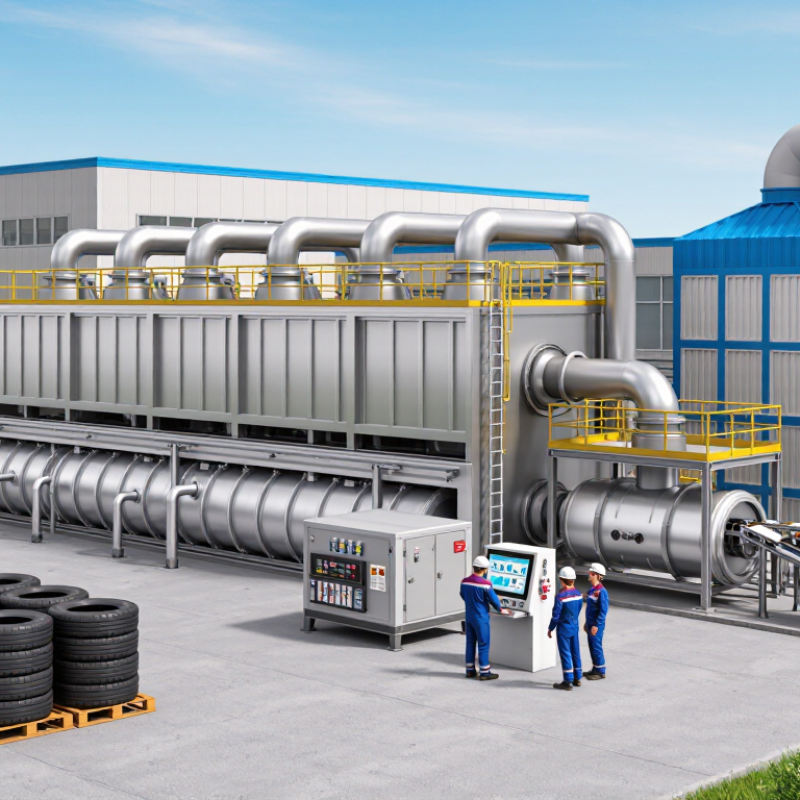
A tire pyrolysis plant heats prepared tires in a low-oxygen reactor. The process produces gas, liquid oil, solid char, and recovered steel. These outputs need separate handling and may require additional processing before use. That affects the equipment list.

Price varies with capacity, operating design, and included systems. A batch plant and a continuous plant can have different feeding, sealing, and discharge equipment. Larger capacity may require bigger condensers, cooling systems, and controls. Emissions treatment and gas handling also matter. Small details matter. A quoted daily capacity does not always show how much material a plant can process in real conditions; tire preparation and operating hours affect throughput.

Installation can add substantial costs. Buyers should check whether the price includes foundations, utilities, shipping, commissioning, operator training, and spare parts. Ask for the scope in writing, including the reactor, feeding system, condensers, controls, and emissions equipment. One estimate may still hide a gap. Comparing quotes is difficult when one excludes installation or after-sales support. Requesting a clear equipment list and stated operating assumptions makes the price easier to assess.

Indicative Plant Prices: US$50,000–US$2 Million Across Configurations

A tire pyrolysis plant for sale may be advertised at US$50,000, while a larger, more automated configuration can approach US$2 million. These figures are indicative, not firm quotations. The gap reflects differences in processing capacity, operating design, and what equipment is included.

At the lower end, a smaller batch plant may include a reactor, basic feeding and discharge equipment, and simple controls. Buyers should check whether tire cutting, gas treatment, oil storage, installation, and operator training are included. A low equipment price can leave substantial costs outside the quote. Details matter.

Higher-priced systems may offer greater throughput, continuous operation, stronger automation, and more extensive emissions-control equipment. For a meaningful comparison, request the expected daily feed rate and fuel or power requirements, then confirm the assumptions behind those figures. Ask for a line-by-line equipment list, shipping terms, and commissioning costs. It is easy to compare reactor prices and overlook site preparation or local utilities. That mistake can distort the budget. Even careful estimates may need revision once the site layout, feedstock condition, and operating schedule are known.

How Processing Capacity, Often 5–20 Tonnes per Day, Affects Cost

What Is the Price of a Tire Pyrolysis Plant for Sale?

For a 5–20-tonne-per-day tire pyrolysis plant, capacity is a major price driver, but it does not set the price alone. At 300 operating days yearly, that range means roughly 1,500–6,000 tonnes of tire feed. Larger capacity typically needs bigger reactors, stronger feeding systems, more extensive gas treatment, and greater storage space. These additions can raise equipment, installation, and utility costs. Prices are not directly proportional to daily throughput.

The European Tyre and Rubber Manufacturers’ Association’s 2023 end-of-life tyre report estimates that Europe generated about 3.9 million tonnes of used tires in 2022. That figure indicates the scale of the material stream, not a guaranteed supply for any plant. For a specific quote, check the rated feed capacity, expected operating hours, tire preparation requirements, and which systems are included. Ask for estimated oil, recovered carbon material, and steel outputs under stated feed conditions. A tidy spreadsheet can still mislead; actual feed and downtime matter.

Tips: Compare quotes at the same daily capacity and scope. Check installation, emissions controls, commissioning, and spare parts. Measure twice. A 20-tonne-per-day rating may not mean 20 tonnes processed every day.

How Typical Yields of 35–45% Oil and 30–35% Char Shape Plant Value

What Is the Price of a Tire Pyrolysis Plant for Sale?
How Typical Yields of 35–45% Oil and 30–35% Char Shape Plant Value

A tire pyrolysis plant’s price reflects more than its nameplate capacity. Typical yield estimates—35–45% oil and 30–35% char—offer a useful starting point. For one tonne of prepared tires, that suggests roughly 350–450 kilograms of oil and 300–350 kilograms of char. Actual output varies with feedstock condition, operating settings, and measurement methods. Not a guarantee.

When comparing quotes, ask how yields were tested and whether calculations use dry feed or incoming tire weight. Oil quality, char particle size, steel recovery, and energy consumption affect saleable output and operating costs. A lower-priced unit may produce inconsistent batches or need more sorting and maintenance. Ask whether the price includes feeding, cooling, emission-control, and storage equipment; missing items can change the total investment.

Tips: Request a mass-balance report from a comparable operating line, then check utility use and downtime records. Compare product specifications and buyer acceptance, not yield percentages alone. Leave room for uncertainty: even a careful estimate can miss seasonal changes in feedstock quality.

How Emissions Controls, Feed Preparation, and Installation Change Total Cost

A tire pyrolysis plant’s sale price is only the starting point. Emissions controls can add major equipment and operating costs: a thermal oxidizer, gas-cleaning equipment, particulate filters, monitoring instruments, and a properly designed stack. The European Commission’s 2018 Waste Treatment BREF treats air-emission abatement and monitoring as core process systems, not optional extras. The exact configuration depends on the process and site. Ask for an itemized quote, including what each control is designed to capture.

Feed preparation changes the budget too. Tires may need to be inspected, de-beaded, cut, or shredded before entering the reactor. That means more equipment, power, maintenance, and space. Williams’ 2013 review in Waste Management reports that tire-pyrolysis liquid yields commonly vary around 40–60% by mass, depending on operating conditions. That variation matters: inconsistent feed can make output less predictable. It is easy to overlook.

Installation adds freight, foundations, electrical work, fire protection, utilities, commissioning, and operator training. A low equipment price may exclude several of these items. I would compare total installed cost, not just the reactor quote. Leave room for site-specific changes; early estimates are rarely perfect.

FAQS

What does a tire pyrolysis plant produce?

It heats prepared tires in a low-oxygen reactor, producing oil, char, gas, and recovered steel. Each output needs separate handling.

Why can plant prices vary so much?

Capacity, operating design, and included equipment all affect price. Feeding systems, condensers, cooling, controls, and emissions equipment can change the total.

Does the quoted daily capacity show actual throughput?

Not always. Tire preparation and operating hours affect how much material the plant processes. Ask for the assumptions behind the figure.

What costs might a plant quote leave out?

Foundations, utilities, shipping, commissioning, training, and spare parts may be excluded. A quote can still leave gaps.

What are typical oil and char yields?

Estimates often suggest 35–45% oil and 30–35% char. For one tonne of prepared tires, that equals about 350–450 kilograms of oil and 300–350 kilograms of char. Not guaranteed.

How should yield figures be checked?

Ask whether tests used dry feed or incoming tire weight. Request a mass-balance report, plus utility-use and downtime records from a comparable line.

What affects whether the outputs can be sold?

Oil quality, char particle size, steel recovery, and buyer specifications matter. A high yield figure alone may not mean more saleable product.

How can buyers compare quotes fairly?

Compare equipment lists, installation scope, product specifications, and operating assumptions. Leave room for feedstock changes; even a careful estimate can be wrong.

Conclusion

A Tire Pyrolysis Plant For Sale can range in price from about US$50,000 to US$2 million, depending on its configuration and level of automation. The plant converts end-of-life tires into useful outputs, and its purchase price is influenced by processing capacity, equipment design, and the scope of the supplied system. Many configurations handle approximately 5–20 tonnes of tires per day, with higher-capacity systems generally requiring a larger investment.

Expected output also helps buyers assess a plant’s potential value. Typical operations may produce around 35–45% oil and 30–35% char, although actual yields vary with feedstock and operating conditions. The quoted equipment price may not include every project cost: emissions-control systems, tire preparation equipment, site work, transport, and installation can all affect the total budget. Comparing proposals on capacity, included components, expected performance, and installation scope provides a clearer basis for estimating the overall investment.


Aria

Aria

Aria is a dedicated marketing professional with a deep passion for innovative strategies and a keen understanding of our company's product offerings. With a wealth of experience in the industry, Aria excels at crafting engaging content that highlights the unique features and benefits of our......