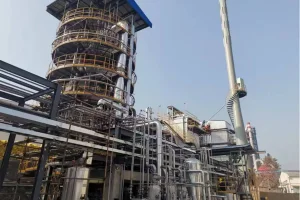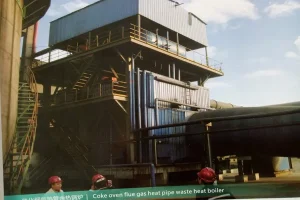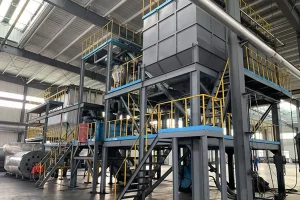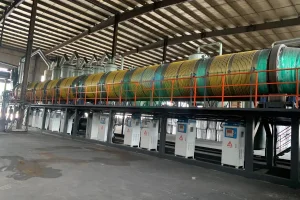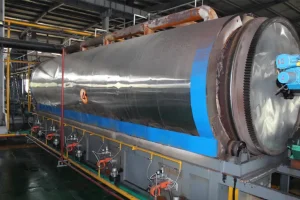
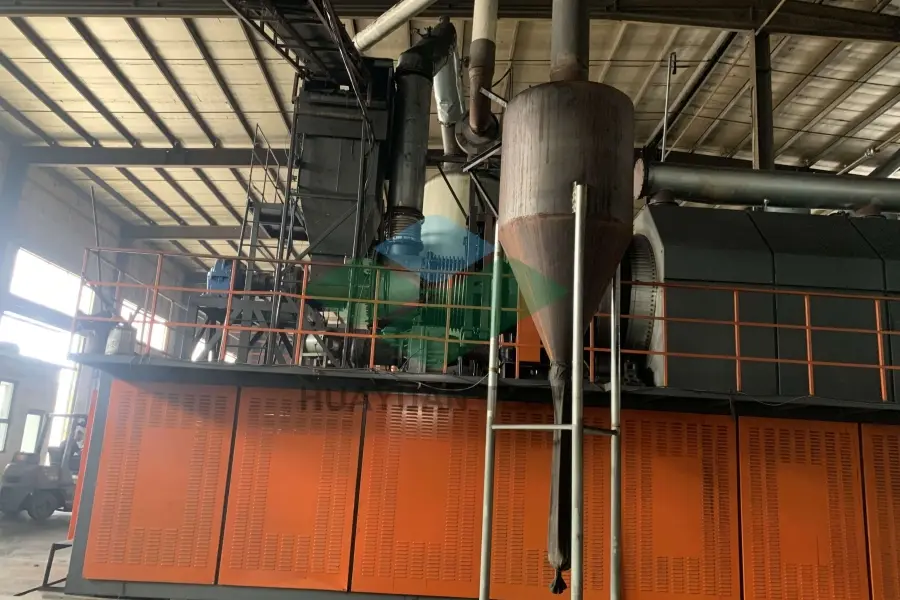
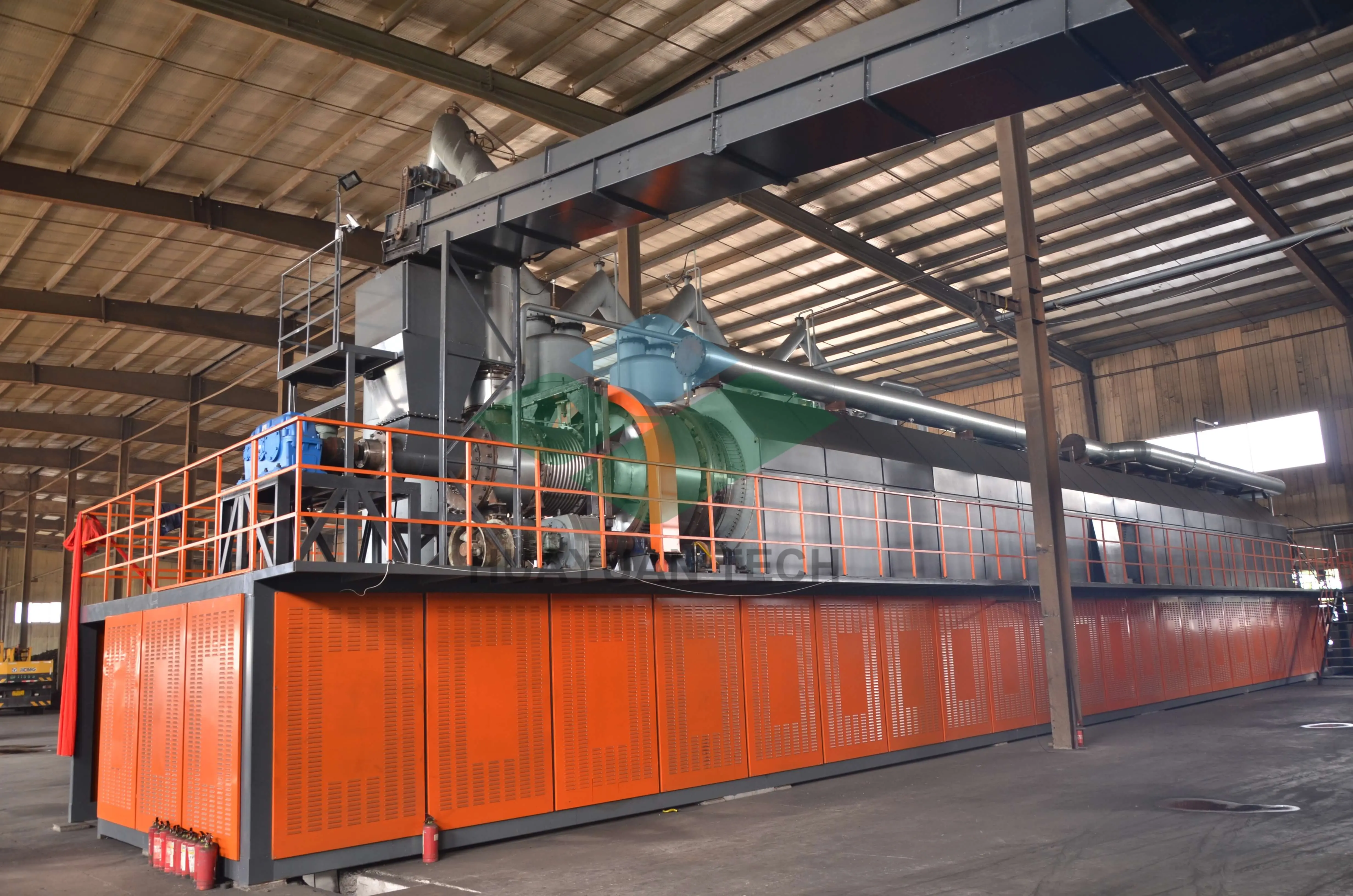
High-Quality Continuous pyrolysis plant(5-10cm tire blocks as feedstock) Manufacturer, Suppliers

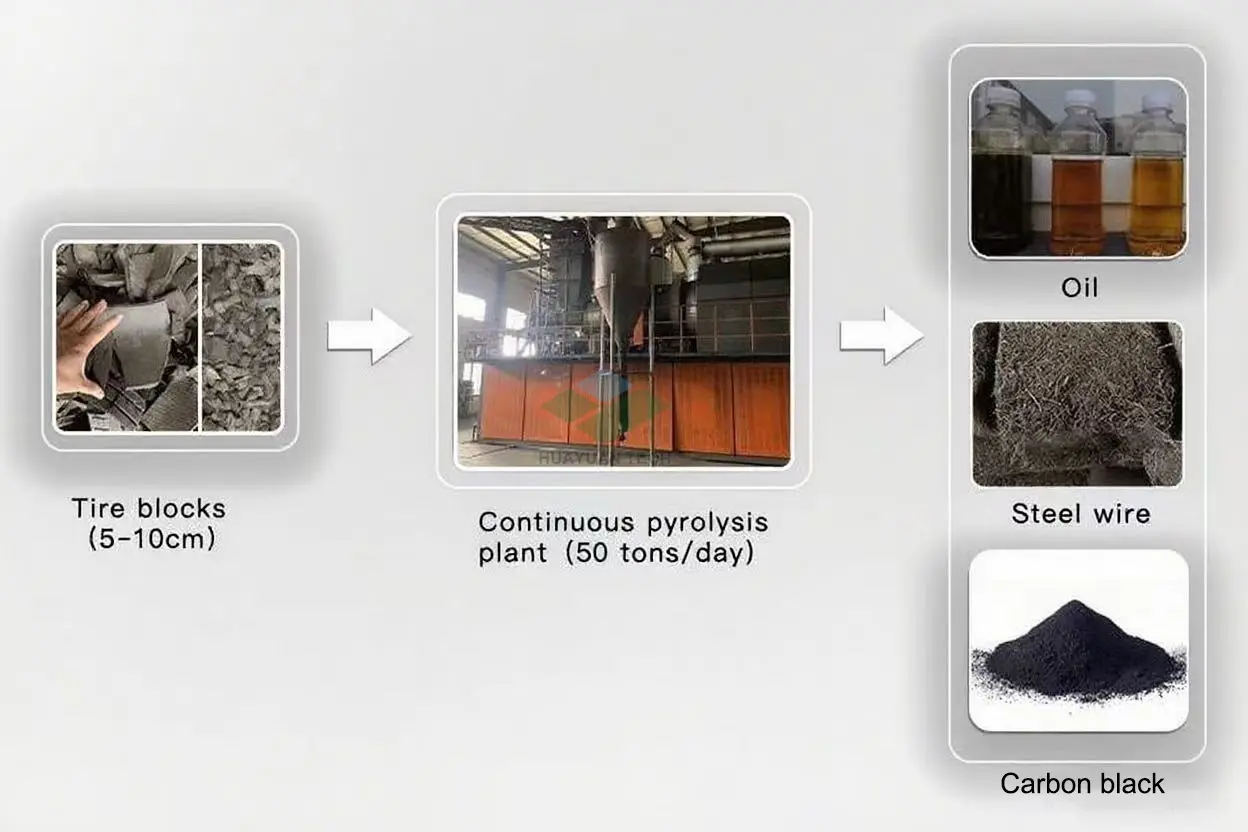
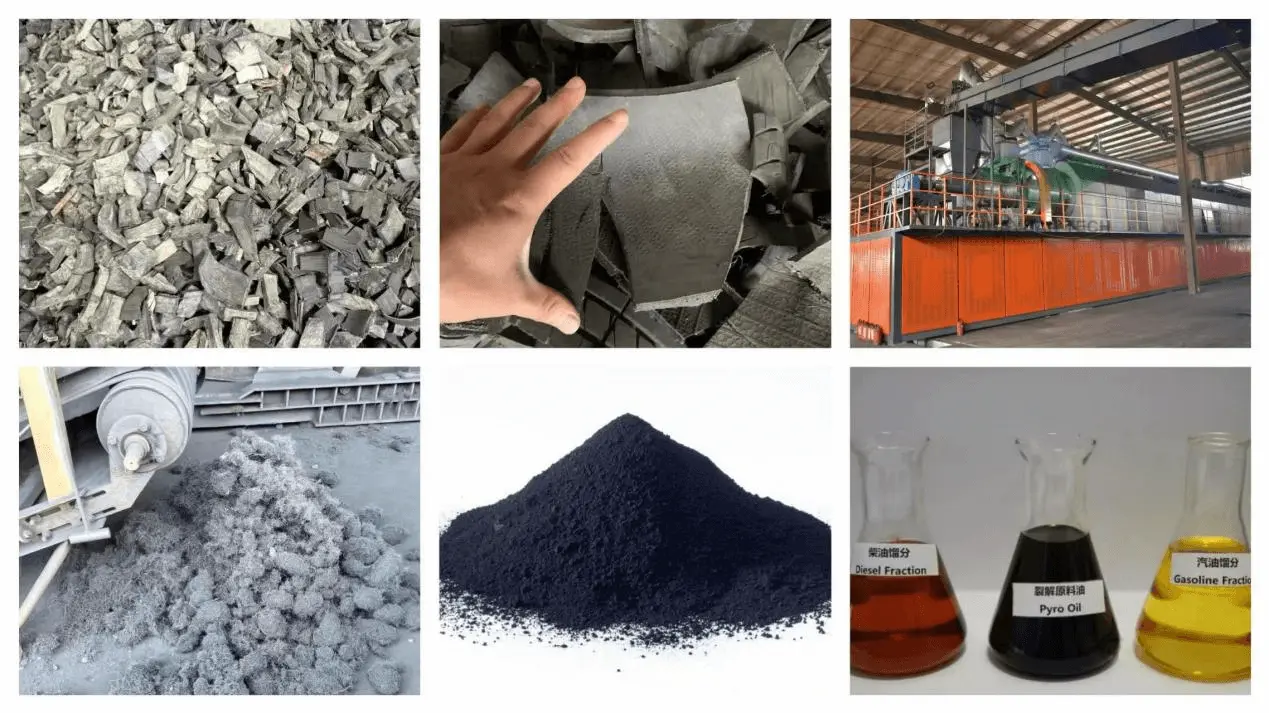
Our company has launched a revolutionary continuous tyre pyrolysis plant, processing 50 tons of 5-10 cm rubber blocks daily—eliminating the need for energy-intensive rubber powder production.

Unlike traditional methods, it feeds rubber blocks directly into the reactor, cutting electricity and labor costs. Operating continuously for 30-50 days, it produces high-quality fuel oil and carbon black, boosting profitability.

This sustainable innovation transforms tyre recycling with enhanced efficiency, lower costs, and strong returns, while our, a leading pyrolysis equipment manufacturer, delivers such cutting-edge waste-to-energy solutions globally.

Product Description

Product Video

Our Advantages

1. Unique rotary seal design, with a long maintenance free operating cycle.
2. Special process design ensures that the carbon powder after pyrolysis meets industry requirements.
3. An effective defocusing layout greatly extends the cleaning cycle of the equipment.
4. An independent safety control system effectively detects gas leaks and system oxygen levels.
5. An efficient feed control system that prevents combustible gases from escaping while feeding.
6. Adopt various forms of combination processes for different materials to better ensure safe and efficient production.
7. Achieve leak free sealing of rubber block feeding and solve the problem of sealing of mixed discharge of rubber powder and steel wire.
8. Realize constant temperature adjustable heating.
9. Achieved long-term effective operation of the sealing system.

Working Principle

1
Pre-processing Steps

The raw materials are shredded by a shredder and transformed into tire rubber blocks with a uniform size of 5-10cm, which are then transported to the feeding machine for preparation.

2
Pyrolysis Process

The combustion engine heats the pyrolysis kettle. Upon reaching the set temperature (400-420°C), the feeding machine starts. Raw materials decompose into gas while impurities are discharged via the tail slag extractor. This phase transition transforms solid matter into liquid and gas states under controlled pressure (6-10Kp).

3
Flue Gas Condensation & Purification

High-temperature oil and gas are cooled by secondary water cooling to room temperature. This mixture undergoes three-stage precipitation to remove impurities. Oil is stored in tanks, while remaining combustible gas is purified through a dechlorination and neutralization device.

4
Gas Constant Pressure Storage

Combustible gas is stored in tanks after precipitation and dehydration. A Roots blower then transports it to a constant pressure storage tank for backup use.

5
Combustion Heating

When storage pressure hits 10KP, the system switches to self-circulating combustion. The generated gas heats the kettle in a specialized combustion chamber (up to 1500°C), ensuring full combustion before emission.

6
Exhaust Gas Heat Exchange

Exhaust gas is cooled from 380°C to 180°C via a heat exchanger. The recovered heat is used for auxiliary combustion, significantly reducing emissions and energy consumption.

7
Combustion Exhaust Gas Treatment

Exhaust undergoes water bath dust removal, desulfurization, and filler purification to remove odors and sulfur. Post-emission meets standard GB/T32662-2016.
Frequently Asked Questions

What is the normal operating temperature for the pyrolysis kettle?
The normal operating temperature for the pyrolysis process is maintained between 400 and 420 degrees Celsius to ensure efficient phase transition.
How does the system handle combustible gas emissions?
The system utilizes a self-circulating combustion design where the gas generated during pyrolysis is purified and reused to heat the kettle, minimizing external fuel needs.
What raw material size is required for the feeding system?
Raw materials should be shredded into uniform tire rubber blocks sized between 5-10cm for optimal feeding and processing.
Does the equipment meet environmental protection standards?
Yes, the system includes multiple stages of dust removal, desulfurization, and odor purification, meeting the GB/T32662-2016 emission standards.
How is safety monitored within the system?
An independent safety control system is integrated to monitor gas leaks and oxygen levels in real-time, ensuring safe production environments.
What are the benefits of the unique rotary seal design?
The unique rotary seal design provides a long maintenance-free operating cycle and ensures a leak-free environment for rubber block feeding and discharge.

Related Products