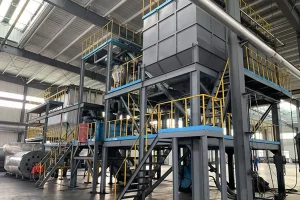
In the contemporary era of the "Circular Economy," the demand for High-Quality Diesel Fuel Recycling has transitioned from a niche environmental concern to a cornerstone of global industrial strategy. As fossil fuel reserves fluctuate and environmental regulations tighten, the ability to convert waste—such as plastics, tires, and rubber—into usable diesel fuel is a game-changer for economies worldwide.
The global diesel recycling market is currently witnessing a massive influx of investment. From the European Union's stringent "Green Deal" initiatives to Southeast Asia's rapid industrialization, the need for efficient waste-to-energy conversion systems has never been higher. Large-scale logistics fleets, maritime transport, and remote industrial power plants are actively seeking recycled diesel to lower carbon footprints and mitigate fuel procurement costs.
Traditional crude oil extraction is becoming more costly and politically complex. Recycling waste into diesel provides a reliable, localized alternative.
Governments are enforcing zero-waste-to-landfill policies, making pyrolysis and refining plants an essential investment for industrial waste management.
Converting low-value waste into high-value diesel fuel offers a significant return on investment, often paying for the machinery within 18-24 months of operation.
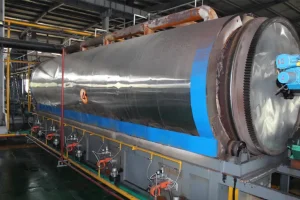
The industry is moving toward Continuous and Fully Automated Systems. Gone are the days of labor-intensive batch processing. Modern factories now demand "Smart Refineries" that integrate AI-driven temperature control and catalytic efficiency monitoring to ensure the highest purity of output diesel.
Another major trend is the integration of Multi-Feedstock Flexibility. A top-tier Diesel Fuel Recycling Factory must now provide machines capable of handling tire blocks, plastic scrap, and even oil sludge simultaneously without compromising the quality of the refined fuel. This versatility allows operators to pivot based on the cheapest available waste material in their local market.
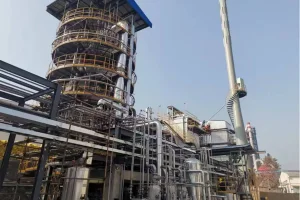
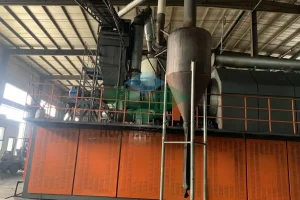
Furthermore, the shift toward Zero-Emission Pyrolysis is critical. Advanced scrubbing systems and closed-loop water cooling are now standard, ensuring that the process of creating "Green Fuel" doesn't contribute to local air or water pollution.
Focusing on waste-to-energy and waste tire pyrolysis technology, Huayuan Tech was founded in 1968. With over half a century of expertise, we have evolved into a global powerhouse for energy-efficient equipment.
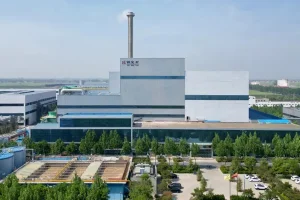
Our facility covers a staggering 209,335 square meters, with a dedicated plant area of 98,680 square meters. We employ more than 500 professionals, where our engineering and technical personnel account for 34% of the total workforce, ensuring that every piece of machinery we produce is backed by deep scientific research and engineering rigor.
Why choose a Chinese factory like Huayuan? It is simple: Scale, Certification, and Integration. We hold complete A-class boiler and pressure vessel manufacturing licenses, along with the United States ASME certification. This allows us to offer premium, globally-compliant machinery at a price point that facilitates faster business growth for our international clients.
Holding D1 and D2 pressure vessel design certificates, we don't just build—we innovate and engineer custom solutions for unique waste challenges.
Fully compliant with ISO9001, ISO14001, and OHSAS18001, guaranteeing quality management and worker safety standards.
From manufacturing and sales to contract energy management and financing, we provide a holistic 360-degree service model.
Diesel fuel recycling equipment is utilized in diverse environments across the globe:
When global enterprises search for a Diesel Fuel Recycling Manufacturer, they prioritize several critical factors beyond just the price:
1. Safety & Compliance: In the oil and energy sector, safety is paramount. Our adherence to ASME standards and pressure vessel installation permits provides the "Peace of Mind" that international procurement officers require.
2. Scalability: Can the factory scale from a 10-ton batch plant to a 50-ton continuous system? Huayuan Tech’s vast manufacturing area allows us to handle multiple large-scale projects simultaneously.
3. Technical Support: The complexity of pyrolysis technology requires expert installation and after-sales consulting. Our 34% technical staff ratio ensures that we provide hands-on training and lifetime technical support for all our installations.
 Huayuan