The global tire industry produces over 1.5 billion waste tires annually, creating a massive environmental challenge known as "Black Pollution." For decades, these tires ended up in landfills or illegal stockpiles, posing fire risks and breeding grounds for pests. However, the 21st-century industrial shift toward the Circular Economy has transformed waste tires from "garbage" into "black gold."
Today, high-quality tire disposal and recycling factories are at the forefront of this transformation. In regions like Europe, North America, and Southeast Asia, stringent environmental regulations and ESG (Environmental, Social, and Governance) mandates are driving corporations to seek sustainable end-of-life solutions for rubber products. The market is moving away from simple mechanical shredding toward Advanced Thermal Conversion (Pyrolysis), which recovers valuable resources like fuel oil, carbon black, and steel.
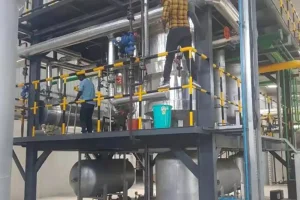
Modern factories are integrating AI and IoT to monitor pyrolysis temperatures and pressure in real-time, ensuring maximum oil yield and operational safety with minimal human intervention.
The trend is shifting from low-grade carbon black to "Recovered Carbon Black" (rCB) that can be reused in new tire manufacturing, closing the loop of the rubber industry.
Recycling plants are now qualifying for carbon credits. By diverting tires from landfills and reducing crude oil reliance, factories can generate additional revenue through green certificates.
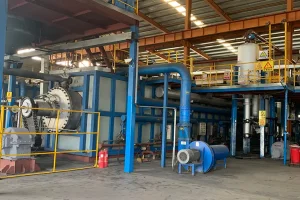
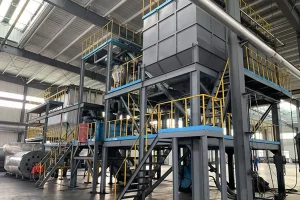
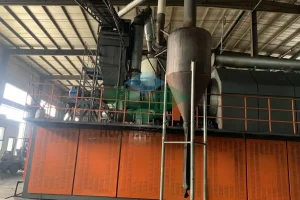
Global enterprises, from multinational logistics firms to municipal waste management authorities, are increasingly investing in localized tire recycling hubs. The demand is no longer just for "a machine," but for a complete industrial ecosystem.
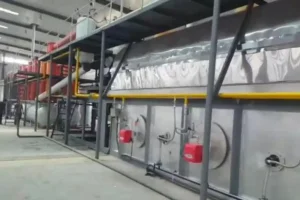
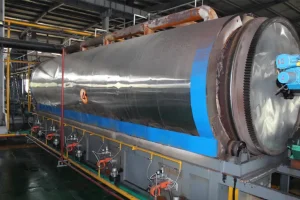
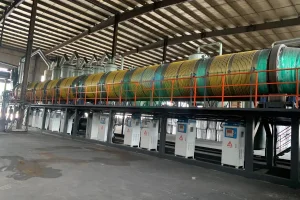
Cities are adopting semi-continuous rotary kiln systems to handle massive volumes of passenger car tires, reducing landfill pressure and generating heating oil for local utilities.
Remote mining sites utilize OTR (Off-The-Road) tire pyrolysis plants to dispose of giant tires on-site, eliminating high transport costs and producing fuel for mining machinery.
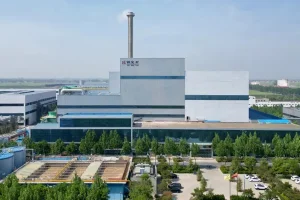
Industrial giants use waste-to-energy plants to co-process tire-derived fuel (TDF), significantly lowering their carbon footprint and energy expenses.
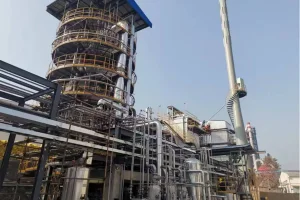
Focus on waste to energy and waste tire pyrolysis technology, Huayuan Tech was founded in 1968. Our heritage spans over five decades of mechanical innovation and pressure vessel expertise.
Our massive manufacturing base covers an area of 209,335 square meters, with a specialized plant area of 98,680 square meters. We employ more than 500 professionals, where engineering and technical personnel account for 34% of our total workforce, ensuring every project is backed by deep scientific rigor.
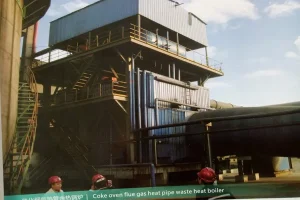
We possess a complete suite of A-class boilers and pressure vessels manufacturing and testing equipment. Our commitment to quality is validated by our ISO9001, ISO14001, and OHSAS18001 certifications, alongside the prestigious United States ASME certification.
Unlike trading companies, we control the entire process from design to casting and assembly. This ensures 100% quality control and the ability to customize plants for specific rubber feedstocks.
Leveraging China's robust industrial supply chain, we provide ASME-standard equipment at a fraction of the cost of European competitors, ensuring a faster Return on Investment for our clients.
From initial site planning and environmental impact assessment to installation and technician training, Huayuan Tech provides a seamless, end-to-end service for global investors.
With the continuous development of enterprises, Huayuan has now become engaged in boiler, pressure vessels, waste tire and plastic scrap pyrolysis machine development, manufacturing, sales, and consulting services. We specialize in thermal equipment system integration and investment financing, supplemented by energy-efficient professional firms. Our technology is designed to handle everything from 5-10cm tire blocks to fine rubber powder, converting them into high-value energy resources.
 Huayuan