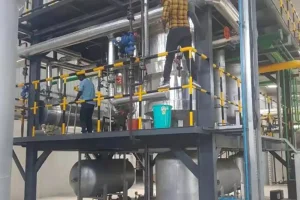
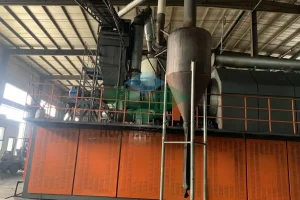
The global industrial waste recycling market, specifically focusing on "Type 1" materials—which includes high-grade polymers, end-of-life tires (ELT), and complex industrial plastics—is undergoing a radical transformation. As the world shifts from a linear "take-make-dispose" model to a sophisticated Circular Economy, manufacturers and suppliers are no longer just waste handlers; they are the new raw material producers for the next industrial age.
Economic Insight: The Global Waste-to-Energy and Pyrolysis market is projected to reach over USD 50 billion by 2030, driven by aggressive decarbonization targets and the rising cost of virgin fossil fuels. Governments in the EU, North America, and Southeast Asia are implementing strict Extended Producer Responsibility (EPR) laws, making high-quality recycling infrastructure a mandatory procurement for large-scale industrial enterprises.
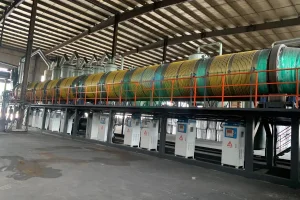
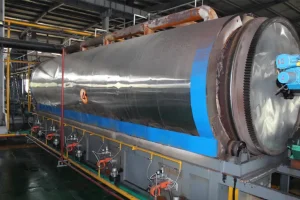
Currently, the "Type 1" sector is characterized by a move toward Chemical Recycling. Unlike traditional mechanical shredding, our advanced pyrolysis technology breaks down molecular chains, allowing for the recovery of high-value TPO (Tire Pyrolysis Oil), combustible gas, and recovered Carbon Black (rCB). This technological leap ensures that "waste" is processed back into its primary chemical form, ready for re-entry into high-end manufacturing supply chains.
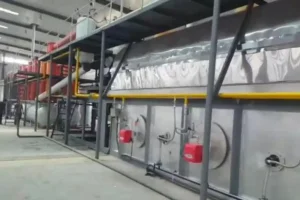
Integration of IoT sensors and AI-driven thermal control systems ensures optimal heating curves, reducing energy consumption by 25% while maximizing oil yield and purity.
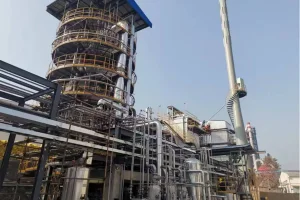
Modern plants are now equipped with multi-stage scrubbing and dedusting systems, meeting the stringent Euro 6 emission standards and helping clients earn carbon credits.
The trend is moving away from massive fixed plants toward modular, containerized pyrolysis units that can be deployed at the source of waste, reducing logistics costs.
Recovered oil is now being refined into diesel-grade fuels or chemical precursors for the new plastic industry, closing the loop entirely.
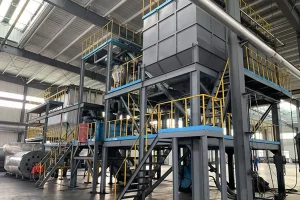
Full-automated feeding and discharge systems minimize human contact with high-temperature zones, ensuring a zero-incident workplace environment.
Blockchain integration for waste-tracking is becoming a standard, providing a "digital passport" for recycled materials to prove their origin and processing quality.
When global enterprises seek a Type 1 Recycling Manufacturer, their requirements go beyond mere hardware. They seek a partner capable of navigating complex local regulations, environmental permits, and ROI calculations.
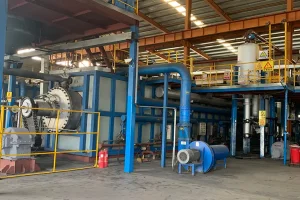
As a leading supplier, we understand that procurement departments prioritize Total Cost of Ownership (TCO). Our systems are engineered for 24/7 continuous operation, with wear-resistant alloys and patented screw-conveyor designs that reduce maintenance downtime by 40% compared to traditional batch systems.
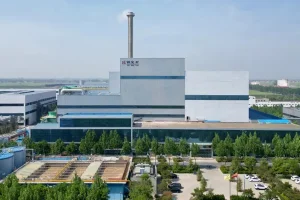
Focusing on waste to energy and waste tire pyrolysis technology, Huayuan Tech was founded in 1968. With over five decades of engineering heritage, we have evolved into a global titan of industrial recycling manufacturing. Our facility spans 209,335 square meters, with a specialized plant area of 98,680 square meters.
Our workforce of more than 500 professionals includes a dedicated engineering team comprising 34% of our staff, ensuring that every piece of equipment we manufacture is backed by rigorous R&D and scientific validation.
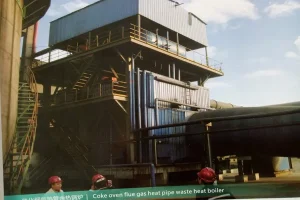
Our expertise extends beyond simple manufacturing. Huayuan Tech offers thermal equipment system integration, contract energy management, and investment consulting. Holding a national A-class boiler license—the highest level in China—signifies our capability to handle the most demanding thermal engineering projects globally. This authority is why top-tier industrial firms trust us as their primary Type 1 Recycling Supplier.
1. Complete Supply Chain Integration: Being located in China's industrial heartland, we have immediate access to high-grade steel, specialized sensors, and electrical components. This proximity allows us to maintain a "Cheap" (Cost-Effective) price point without compromising on "High-Quality" components.
2. Rapid R&D and Prototyping: Our massive plant area allows for full-scale testing of new feedstock. Whether you are recycling rubber powder or 10cm tire blocks, we can calibrate the machinery in-house before shipping.
3. Unmatched Engineering Scale: With 500+ employees and a history dating back to 1968, we possess "Tribal Knowledge" in pyrolysis that new startups simply cannot replicate. Our experience in pressure pipe installation and boiler systems ensures your plant is built to last 20+ years.
4. Global Logistics & Service: We provide full end-to-end support, from pressure vessel design to overseas installation and local technician training, bridging the gap between Chinese manufacturing efficiency and global quality standards.
 Huayuan