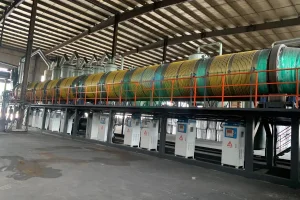
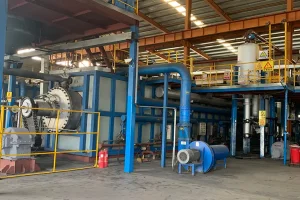
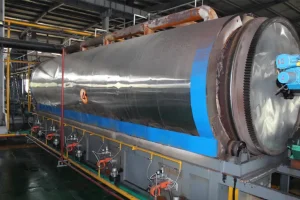
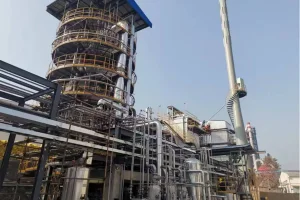
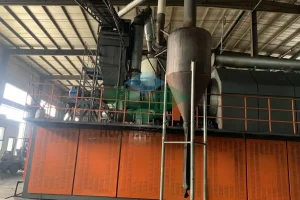
Hamburg, the second-largest city in Germany and a major global logistics hub, is currently undergoing a massive industrial transformation. As the "Gateway to the World," the Port of Hamburg generates significant amounts of industrial waste, including end-of-life tires (ELT), plastic scrap from shipping containers, and rubber-based maritime equipment. This has created a critical demand for localized Batch Model Pyrolysis Plants (Drum running model).
In the context of the German Energiewende (Energy Transition), Hamburg's industrial sectors are moving away from traditional incineration toward high-tech recovery. The drum running model is particularly favored in Northern Germany due to its versatility in handling diverse feedstocks common in port cities. Whether it is processing waste from the automotive clusters in nearby Lower Saxony or maritime waste from the Elbe, our batch model plants offer the precision and reliability required by stringent German environmental standards.
The Batch Model Pyrolysis Plant utilizing a drum running mechanism is the pinnacle of thermal decomposition technology. Unlike continuous systems that require highly uniform feedstock, the drum running model is "material agnostic." This is essential for Hamburg-based factories that deal with fluctuating waste streams.
Our technology focuses on the Circular Economy. By converting waste into fuel oil, carbon black, and steel wire, we help Hamburg factories reduce their carbon footprint while generating a significant Return on Investment (ROI). The recovered carbon black (rCB) is increasingly sought after by the German rubber industry for sustainable tire manufacturing.
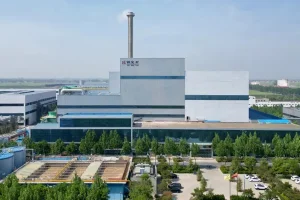
Focus on waste to energy and waste tire pyrolysis technology, Huayuan Tech was founded in 1968. With over five decades of experience, we bring unparalleled expertise to the Hamburg industrial market. Our company covers an area of 209,335 square meters, with a specialized plant area of 98,680 square meters.
We pride ourselves on our human capital, employing more than 500 professionals, where engineering and technical personnel account for 34% of our total workforce. This high ratio of experts ensures that every Batch Model Pyrolysis Plant we deliver to Hamburg is optimized for peak performance and safety.
Our manufacturing prowess is backed by:
With the continuous development of enterprises, we have become a leader in thermal equipment system integration, contract energy management, and investment financing for large-scale waste-to-energy projects in Europe and beyond.
The pyrolysis industry in Hamburg and the wider EU is moving toward Digitalization and AI-driven automation. Our latest drum running models integrate IoT sensors that monitor temperature gradients and gas composition in real-time, allowing for remote operation—a critical feature for modern German factories facing labor shortages.
Another major trend is Chemical Recycling. Pyrolysis is no longer just about fuel; it is about "Plastic-to-Plastic" recovery. By refining pyrolysis oil into high-purity naphtha, we enable the chemical giants in the Hamburg metropolitan region to produce virgin-quality plastics from waste, closing the loop entirely.
 Huayuan