Uruguay has emerged as a global leader in renewable energy, with nearly 98% of its electricity coming from clean sources like wind, solar, and biomass. However, the Industrial Solid Waste (ISW) management sector remains a critical frontier for the country's circular economy goals. As industrial hubs in Montevideo, Canelones, and San José continue to expand, the volume of waste from pulp and paper mills, meat processing plants, and manufacturing facilities has surged.
The Uruguayan government, through the Ministry of Environment (MARENA) and the National Waste Management Plan, is aggressively pushing for alternatives to traditional landfilling. Industrial Solid Waste to Energy (WtE) plants are no longer just an environmental choice; they are a strategic business necessity. By converting hazardous and non-hazardous industrial waste into thermal or electrical energy, local enterprises can significantly reduce operational costs and comply with the strict Ley de Gestión Integral de Residuos.
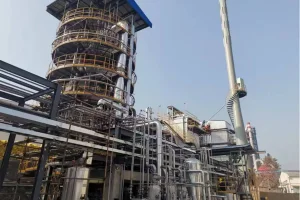
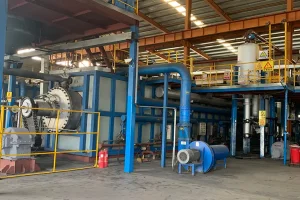
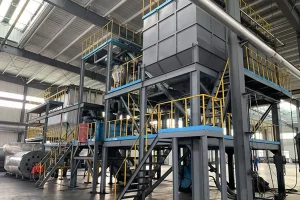
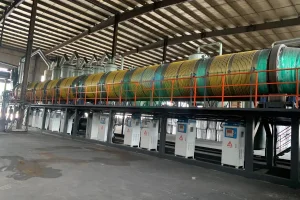
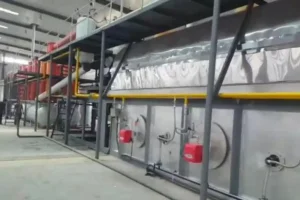
Our role as a premier Industrial Solid Waste to Energy Plant Supplier in Uruguay is to bridge the gap between waste generation and sustainable energy consumption. We provide state-of-the-art pyrolysis and gasification technologies tailored to the specific caloric values of Uruguayan industrial waste streams.
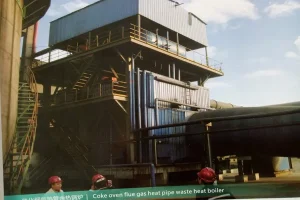
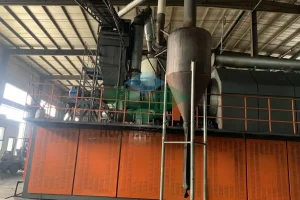
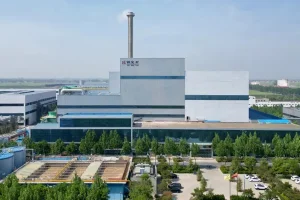
Focusing on waste-to-energy and waste tire pyrolysis technology, Huayuan Tech was founded in 1968. With over five decades of engineering excellence, we have established ourselves as a cornerstone in the thermal equipment industry. Our infrastructure spans a massive 209,335 square meters, with a dedicated plant area of 98,680 square meters. Our workforce of more than 500 employees includes a high concentration of engineering and technical personnel (34%), ensuring that every project in Uruguay receives world-class technical support.
Complete A-class boiler and pressure vessel manufacturing sets with advanced testing equipment.
ISO9001, ISO14001, OHSAS18001, and United States ASME certifications for maximum reliability.
Holding national A-class boilers, A2-class pressure vessel licenses, and D1D2 design certificates.
From manufacturing and sales to contract energy management and investment financing.
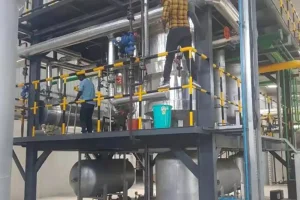
Our continuous development has allowed us to evolve into a multi-faceted energy firm. We don't just sell machinery; we provide Thermal Equipment System Integration. For Uruguayan clients, this means a seamless transition from waste disposal to energy generation, supported by a partner with a proven track record in pressure pipe installation and high-pressure vessel design.
The versatility of our Industrial Solid Waste to Energy Plants makes them ideal for various sectors across the Uruguayan landscape:
Uruguay's massive pulp mills generate significant organic sludge and wood waste. Our plants can convert these residues into high-pressure steam for use in the production process, creating a closed-loop energy system.
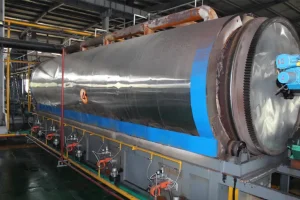
With the increasing number of vehicles in Montevideo, tire disposal is a growing concern. Our Continuous Pyrolysis Plants transform scrap tires into fuel oil, carbon black, and steel wire, providing a profitable solution for waste management companies.
Urban centers like Salto and Maldonado face challenges with plastic pollution. Our technology efficiently processes mixed plastic scrap, diverting it from landfills and turning it into valuable energy resources.
As we look toward 2030, the Waste-to-Energy industry in Uruguay is set to be redefined by AI and advanced automation. Future plants will feature AI-driven sorting mechanisms that optimize the feedstock mix for maximum gasification efficiency. Furthermore, the integration of Carbon Capture and Storage (CCS) within WtE plants will allow industrial facilities to achieve "Net Zero" status.
We are currently developing modular WtE units that can be deployed rapidly in remote agricultural regions of Uruguay, allowing for the decentralized processing of biomass and industrial waste. This "Energy-at-the-Source" model reduces transportation costs and carbon emissions associated with waste hauling.
 Huayuan