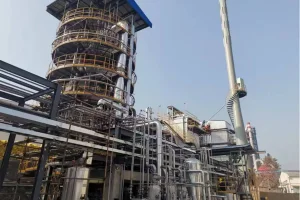
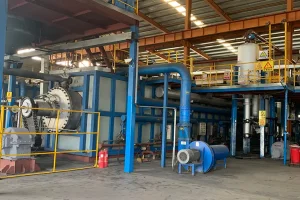
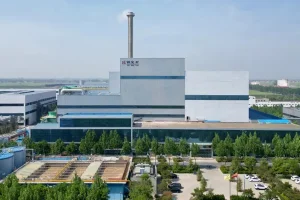
Focus on waste to energy and waste tire pyrolysis technology, Huayuan Tech was founded in 1968. Company covers an area of 209335 square meters, plant area of 98,680 square meters, more than 500 employees, engineering and technical personnel accounting for 34% of the total number of employees. Has a complete A-class boilers and pressure vessels complete sets of manufacturing, testing equipment.
Pressure pipe installation permit, And through ISO9001, ISO14001, OHSAS18001 three system certification and the United States ASME certification. With the continuous development of enterprises has now become engaged in a boiler, pressure vessels, waste tire and plastic scrap pyrolysis machine development, manufacturing, sales, consulting services, thermal equipment system integration, contract energy management, investment and financing.
Holding a national A-class boilers, A2-class pressure vessel manufacturing license, D1D2 pressure vessel design certificate.
Australia is currently undergoing a transformative shift in waste management, driven by the National Waste Policy Action Plan. With thousands of tonnes of End-of-Life Tires (ELTs) generated annually—particularly from the massive Western Australian mining operations and urban transport networks in NSW and Victoria—the demand for high-grade Recovered Carbon Black (rCB) Refining Plants has reached an all-time high. Our manufacturing technology is specifically tailored to meet the rigorous environmental standards and industrial requirements of the Australian landscape.
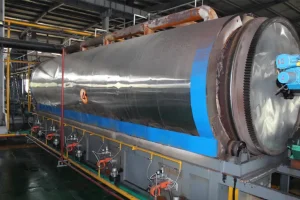
In regions like the Pilbara and the Hunter Valley, heavy machinery tires represent a significant environmental challenge. Traditional landfilling is no longer a viable or legal option. Our Continuous Pyrolysis Plants provide Australian mining firms with a turnkey solution to convert OTR (Off-the-Road) tires into high-value products: fuel oil, steel wire, and most importantly, refined carbon black. This rCB can be reused in the production of new rubber goods, conveyor belts, and even as a pigment in the Australian plastics manufacturing sector.
With Australia's increasing landfill levies, converting waste to rCB offers a significant financial return through the sale of high-purity carbon products and carbon credits.
Our plants exceed Australian emission standards, utilizing advanced syngas scrubbing and closed-loop cooling systems to ensure zero soil or air contamination.
Equipped with IoT sensors and automated feed systems, our plants are designed for remote Australian locations where labor costs are high and efficiency is paramount.
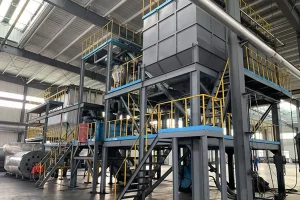
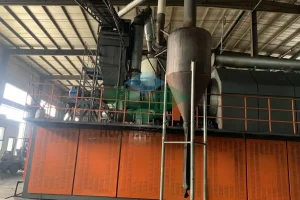
Recovered Carbon Black (rCB) is not just "char." To be commercially viable in Australia’s competitive industrial market, it must undergo meticulous refining. Our Recovered Carbon Black Refining Plants utilize a multi-stage process involving jet milling, magnetic separation, and pelletizing to achieve a particle size and purity level comparable to virgin carbon black (N550/N660 grades).
The Australian Advantage: Our plants are built with high-grade boiler steel and specialized pressure vessels, ensuring they can withstand the extreme temperatures of the Australian Outback. By integrating waste heat boilers, our systems reduce operational energy costs by up to 40% compared to traditional batch systems.
As we look toward 2030, the "Circular Economy" is no longer a buzzword but a regulatory mandate in Australia. The federal government’s ban on exporting waste tires has created a localized boom for rCB manufacturing factories. We are seeing a trend toward "Distributed Pyrolysis Centers"—smaller, high-efficiency plants located near regional hubs like Geelong, Gladstone, and Kwinana.
Another emerging trend is the integration of Green Hydrogen. Some of our Australian partners are exploring the use of pyrolysis syngas as a precursor for hydrogen production, further elevating the E-E-A-T profile of their operations. Huayuan Tech is at the forefront of this, developing "Smart Refineries" that utilize AI to optimize temperature profiles in real-time based on the specific composition of Australian feedstock.
Finally, ESG (Environmental, Social, and Governance) reporting is driving major Australian corporations to seek sustainable carbon black for their supply chains. Using rCB reduces the carbon footprint of rubber products by approximately 80% compared to traditional furnace black. Our ASME-certified plants provide the reliability and data-tracking necessary for these corporations to meet their net-zero targets.
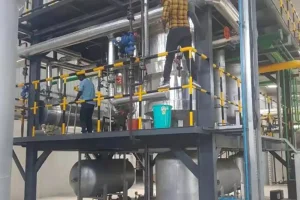
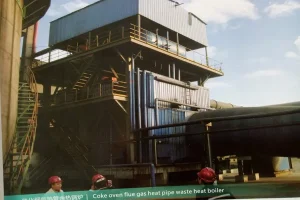
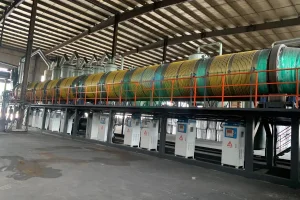
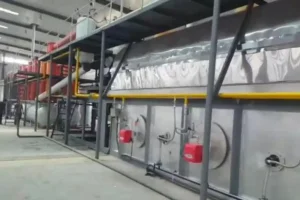
Partner with Huayuan Tech for world-class rCB refining and pyrolysis technology. Our Australian-ready systems are engineered for performance, compliance, and longevity.
Send Inquiry Now Huayuan